
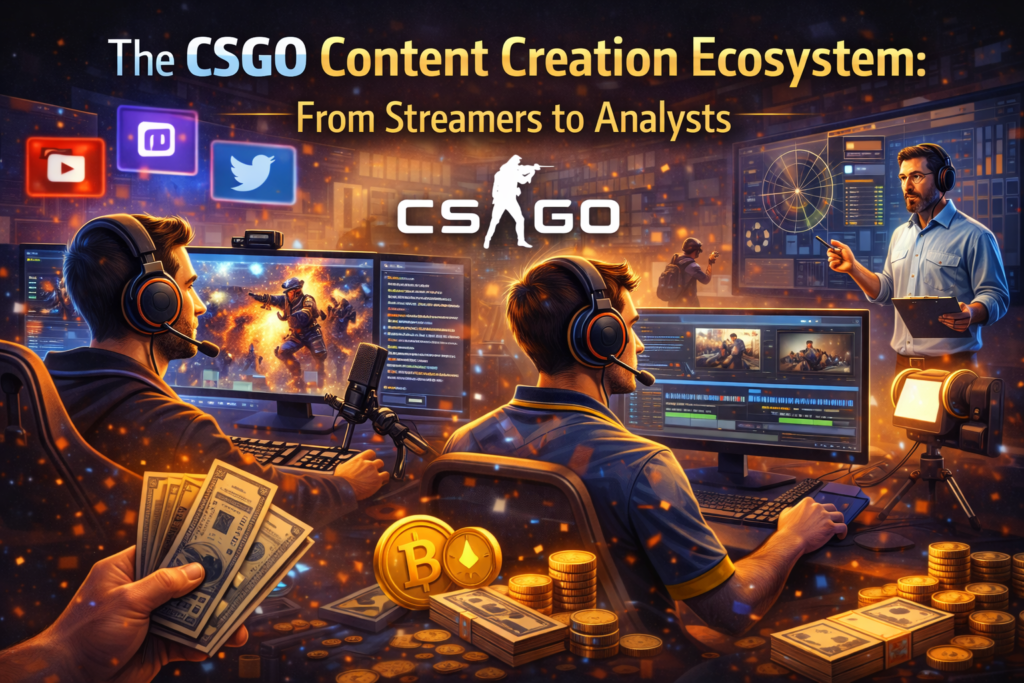
Counter-Strike: Global Offensive has spawned one of gaming’s most vibrant content creation ecosystems. From educational analysts to entertaining streamers, from tournament casters to workshop creators, CSGO supports a massive community of content producers who enhance the game experience for millions of players worldwide.
This ecosystem represents more than entertainment—it’s an economic engine supporting thousands of creators, educators, and professionals. Understanding how this content landscape functions reveals the symbiotic relationship between games and their communities in the modern esports era.
The Streaming Giants
Twitch revolutionized how people consume CSGO content. Live streaming allows viewers to watch skilled players in real-time, learn techniques, and engage with communities. The platform transformed gaming from solitary activity into social experience, with chat interactions creating communal viewing environments.
Top CSGO streamers command audiences of tens of thousands of concurrent viewers. Players like shroud (in his CSGO prime), s1mple, tarik, and fl0m built massive followings by combining elite gameplay with engaging personalities. These streamers earn substantial incomes through subscriptions, donations, and sponsorships, proving that CSGO content creation can be a lucrative career.
Different streaming styles appeal to different audiences. Some viewers want educational content focused on improvement. Others prefer entertainment-first streams prioritizing personality over skill. The diversity of streaming approaches ensures every viewer can find content matching their preferences.
Stream sniping—viewers joining streamers’ matches to interact or troll—creates unique dynamics. While frustrating for streamers, these interactions create memorable moments that become viral clips. The relationship between streamers and their audiences involves constant negotiation of boundaries and expectations.
Educational Content and Coaching
YouTube became CSGO’s primary educational platform. Creators like voo, TheWarOwl, BananaGaming, and NadeKing produce tutorials covering everything from basic mechanics to advanced strategies. This educational content democratizes knowledge that was once exclusive to professional teams.
Spray control tutorials teach players to master weapon recoil patterns. Movement guides explain counter-strafing, jiggle-peeking, and jump-spotting. Utility lineups show precisely how to throw smokes, flashes, and molotovs for every map position. This structured knowledge dramatically accelerates player improvement.
Professional coaching services emerged around CSGO’s competitive scene. Paid coaches analyze demos, provide personalized feedback, and conduct training sessions. Platforms connecting players with coaches create marketplaces for skill improvement, with top coaches charging substantial hourly rates.
Demo review content provides free alternatives to paid coaching. Creators analyze professional matches or viewer-submitted demos, explaining decision-making, positioning, and strategy. This content teaches viewers to self-analyze their own gameplay, developing critical thinking skills beyond mechanical execution.
Frag Movies and Montages
Frag movies represent CSGO content creation’s artistic side. Editors combine incredible plays with cinematic camera work, music synchronization, and visual effects to create short films celebrating gameplay excellence. These productions showcase both player skill and editor creativity.
The frag movie tradition extends back to Counter-Strike 1.6, with legendary productions like “fRoD: the clairvoyant” establishing the genre. Modern CSGO frag movies continue this legacy with improved production values and editing techniques. Creators like Virre and SuperstituM pushed boundaries with innovative transitions, effects, and storytelling.
Community competitions like “Edit Cup” encourage editor development by providing standardized clips for editing challenges. These competitions foster skill improvement while building communities around editing as a craft separate from gameplay.
Highlight channels aggregate the best plays from professional matches and streams. Channels like Virre, SCOPE.GG, and franzj curate top moments, making it easy for fans to catch incredible plays without watching entire matches or streams. This content aggregation serves casual fans who want CSGO’s highlights without deep time investment.
Analysis and Commentary
Professional match analysis creates content for serious CSGO students. Analysts like Moses, SpunJ, and SPUNJ break down professional games, explaining strategic decisions, reading opponents, and tactical innovations. This analysis bridges the gap between watching matches and understanding them.
Post-match analysis has become standard tournament coverage. Analyst desks featuring former professionals and experienced commentators discuss what happened, why teams won or lost, and what to expect in future matches. This context enriches viewer understanding and appreciation.
Statistical analysis emerged as CSGO data became more accessible. Sites like HLTV provide comprehensive statistics, enabling data-driven analysis. Content creators use these numbers to evaluate player performance objectively, identify trends, and predict future outcomes.
Theory-crafting content explores CSGO’s meta-game. Creators discuss optimal team compositions, economic strategies, utility usage patterns, and map control approaches. These discussions happen at higher abstraction levels than individual gameplay, appealing to strategically-minded viewers.
Tournament Coverage and Journalism
Esports journalism covering CSGO rivals traditional sports media in depth and professionalism. Outlets like HLTV, Dust2.dk, and Dexerto provide match coverage, roster changes, industry news, and investigative journalism. This coverage keeps communities informed about competitive scene developments.
Pre-tournament preview content builds hype and provides context. Writers and video creators analyze team forms, predict outcomes, and tell storylines heading into major events. This pre-event coverage enhances viewer investment in tournament outcomes.
Post-event analysis extends conversations beyond tournament conclusions. Detailed retrospectives examine what we learned, how teams performed versus expectations, and what results mean for future competitions. These analyses help audiences process and contextualize what they witnessed.
Investigative journalism occasionally uncovers major stories. Match-fixing scandals, coaching exploits, and organizational misconduct have been exposed through journalist investigations. This accountability journalism serves vital functions in maintaining competitive integrity.
Workshop Creators and Custom Content
Steam Workshop enables community members to create custom maps, game modes, and weapon skins. This user-generated content extends CSGO far beyond official offerings, with some community creations becoming permanently integrated into the official game.
Aim training maps like aim_botz and training_aim_csgo2 are essential practice tools used by players from casual to professional levels. These maps provide controlled environments for mechanical skill development, making improvement more efficient than matchmaking practice alone.
Utility practice maps teach grenade lineups through interactive interfaces. Players can learn smokes, flashes, and molotovs for every scenario without needing to remember positions or angles. These maps dramatically lower the learning curve for tactical utility usage.
Custom game modes like Surf, KZ (climb), and Bhop create entirely different experiences within CSGO’s engine. These alternative modes built dedicated communities, with players specializing in movement mechanics separate from competitive play. Some players primarily engage with CSGO through these custom modes rather than traditional matches.
Skin creators who successfully get designs accepted into official cases earn substantial revenue shares. The most successful Workshop artists have earned hundreds of thousands of dollars from their designs. This economic opportunity encourages high-quality community content creation.
The Entertainment and Variety Content
Entertainment-focused CSGO content prioritizes fun over education. Creators produce challenge videos (winning with only knife, pistol-only games), comedy sketches, trolling compilations, and variety content using CSGO as a vehicle for entertainment rather than skill demonstration.
The “silver adventures” genre follows low-ranked players through chaotic matches where unpredictable gameplay creates comedy. These videos celebrate CSGO’s accessibility—even terrible players can have fun and create memorable moments. This content appeals to casual audiences who relate more to mistakes than perfection.
Case opening videos, despite ethical concerns, remain massively popular. The suspense of potentially unboxing valuable items creates engaging content. Major creators’ case opening videos regularly achieve millions of views, demonstrating sustained audience interest in gambling-adjacent entertainment.
The broader entertainment ecosystem includes CSGO Gambling Sites, trading communities, and skin showcase channels. While controversial, these elements constitute significant portions of CSGO’s content landscape, attracting audiences interested in the game’s economic dimensions beyond pure gameplay.
Podcasts and Long-Form Discussion
CSGO podcasts provide deeper dives than traditional video content allows. Shows like “HLTV Confirmed,” “By The Numbers,” and “Counter-Points” feature hour-plus discussions about competitive scene developments, meta evolution, and community issues.
These long-form discussions suit specific contexts—commuting, exercising, or casual listening while doing other activities. The audio-only format works well for analysis-heavy content where visuals aren’t essential, making podcasts perfect for strategic discussions.
Interview shows bring personalities to audiences in intimate settings. Hour-long conversations with professional players, coaches, and industry figures reveal personal stories, career journeys, and perspectives impossible to convey in shorter formats.
Community discussion shows invite audience participation through questions, polls, and chat interaction. This inclusive approach creates dialogue rather than monologue, building community around shared CSGO interest.
Social Media and Short-Form Content
Twitter became CSGO’s primary platform for real-time reactions, news breaking, and community discussion. Players, teams, analysts, and fans share thoughts instantly, creating dynamic conversations around events as they unfold. The platform’s immediacy suits esports’ fast-moving nature.
Instagram and TikTok emerged as platforms for bite-sized CSGO content. Highlight clips, memes, and short tutorials optimized for mobile viewing attract younger audiences who prefer scrolling to watching full videos. These platforms expand CSGO’s reach beyond traditional YouTube and Twitch audiences.
Meme culture surrounding CSGO creates entertainment separate from gameplay. Community inside jokes, copypastas, and image macros build shared cultural knowledge. Participation in meme culture becomes its own form of community engagement.
Reddit communities like r/GlobalOffensive serve as content aggregators and discussion hubs. Users share videos, discuss strategies, report bugs, and celebrate plays. The upvote system surfaces quality content, functioning as community-curated content curation.
Tournament Broadcasting and Production
Professional tournament broadcasts rival traditional sports production quality. Multiple camera operators, observer specialists, replay operators, graphic designers, and production directors coordinate to create polished viewing experiences. This production infrastructure represents major investments in esports legitimacy.
Observer skill significantly impacts viewer experience. Great observers anticipate action, catch important kills, and provide smooth viewing. Players like Prius and Rush became recognized for observer excellence, demonstrating that behind-the-scenes roles deserve recognition.
Commentary teams combine play-by-play casters with color analysts. Casters like Anders, HenryG, and Machine bring excitement and energy, while analysts like YNk, Moses, and Spunj provide strategic insight. This division of labor creates comprehensive coverage serving both casual and hardcore viewers.
Alternative streams offer different perspectives on tournaments. Watch parties hosted by popular streamers, beginner-friendly “noob streams,” and multi-language broadcasts ensure diverse audiences can enjoy events in formats matching their preferences and language needs.
Community Servers and Moderation
Community servers create alternative play environments outside official matchmaking. Servers with unique rules, custom maps, or specific focuses (aim training, retakes, executes) provide variety and specialized practice. These communities often develop tight-knit regular player bases.
Moderation and administration of community servers requires dedication. Server owners and moderators handle technical issues, enforce rules, and maintain positive environments. This volunteer work sustains community spaces that enhance CSGO beyond official offerings.
Retake servers—where players practice site retakes and post-plant situations—became essential training tools. These focused practice environments develop specific skills more efficiently than full matches. Professional teams sometimes use community retake servers for warm-ups before matches.
The Economic Impact
The content creation ecosystem generates substantial economic activity. Full-time content creators earn livings through various revenue streams: advertising, subscriptions, donations, sponsorships, and affiliate marketing. This creates career opportunities in gaming beyond professional play.
Sponsored content and brand partnerships connect CSGO audiences with gaming peripheral companies, energy drinks, betting sites, and other gaming-adjacent brands. These partnerships provide crucial funding enabling creators to produce higher quality content.
The job market around CSGO content extends beyond individual creators. Video editors, graphic designers, social media managers, and business managers all find employment in the CSGO content ecosystem. This infrastructure creates diverse career paths within the industry.
The Future of CSGO Content
Virtual and augmented reality may transform how audiences experience CSGO content. Imagine watching matches from player perspectives in VR, or having stats and information overlaid via AR while watching tournaments. These technologies could revolutionize spectator experiences.
AI-powered content tools might democratize production further. Automated highlight detection, AI commentators for matches without casters, and machine learning-assisted editing could lower barriers to content creation. However, questions about authenticity and value of AI-generated content remain unresolved.
Interactive content allowing viewers to choose camera angles, access real-time statistics, or control their viewing experience represents another frontier. Giving audiences more agency over consumption could increase engagement and satisfaction.
The transition to Counter-Strike 2 will test content creator adaptability. Will existing content styles transfer? What new content opportunities will CS2’s features enable? How will audiences respond to changes? These questions will shape CSGO content’s next chapter.
Conclusion
The CSGO content creation ecosystem represents one of gaming’s richest media landscapes. From educational tutorials to entertainment streams, from frag movies to analytical journalism, from Workshop maps to tournament broadcasts—the variety and quality of CSGO content is staggering.
This ecosystem benefits everyone. Players improve through educational content. Fans stay connected through news and analysis. Casual audiences enjoy entertainment without playing. The symbiotic relationship between game and content enhances both, creating value greater than either could achieve alone.
As CSGO evolves and eventually transitions to Counter-Strike 2, the content ecosystem will adapt. New platforms, formats, and technologies will emerge. But the fundamental dynamic—passionate creators serving engaged communities—will persist, ensuring Counter-Strike remains not just a game but a comprehensive entertainment ecosystem.
Whether you’re a player, viewer, or creator, the CSGO content landscape offers something valuable. Engaging with this ecosystem enhances appreciation for the game’s depth, connects you with global communities, and demonstrates gaming’s evolution from solitary pastime to socially rich, culturally significant phenomenon.
Last updated: March 2026