
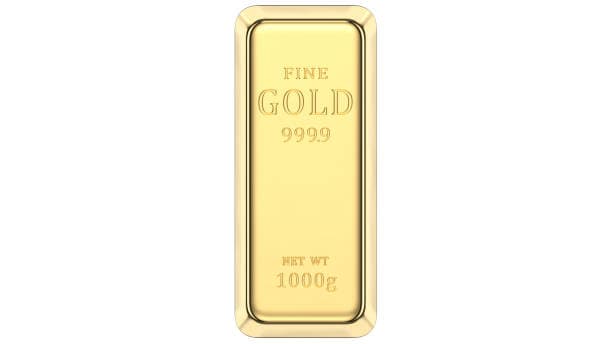
You know, it’s funny. We’re surrounded by numbers all day—stock tickers, crypto charts, the price of milk—but there’s one number that has held a peculiar, almost mystical grip on humanity for millennia: the gold price. It’s not just a commodity quote, it’s a pulse check on global anxiety, a barometer of trust in paper money, and a shiny, timeless security blanket. Right now, as you check a site like Bitget’s gold price calculator to see what one kilo is worth in South African Rand (ZAR), you’re tapping into a story far richer than a simple currency conversion. You’re witnessing the end result of a colossal, global tug-of-war. So, what’s really moving this ancient metal’s modern valuation? Let’s pull up a chair and dig into the messy, fascinating drivers behind the ever-fluctuating gold price, and maybe, just maybe, figure out how to get a glimpse of where it’s headed next.
The Fear and Greed Gauge: Geopolitics and Economic Jitters
At its core, the gold price is the world’s favorite hiding spot. When headlines scream about wars, political coups, or trade tensions, investors don’t typically rush to buy more stocks. They flock to gold. Why? Because it’s nobody else’s liability. A government can collapse, a currency can hyperinflate into wallpaper, but that ounce of gold in your hand remains an ounce of gold. This “safe-haven” demand is the most powerful short-term rocket fuel for the gold price. Think of it as collective blood pressure: when the world’s pressure rises, so does the gold price. It’s a direct correlation. You see a crisis brewing in a major oil-producing region? Watch the gold price tick up in anticipation. It’s a primal, almost instinctual market move.
But it’s not just about missiles and elections. Economic fear is just as potent. When people lose faith in the financial system or expect a recession, gold shines. A shaky banking sector? Check the gold price. Talk of massive, debt-fueled government spending? That often leads to fears of inflation, which is kryptonite to cash but a great friend to gold. Historically, gold has been seen as a store of value that can preserve purchasing power when paper money loses its worth. So, when inflation expectations rise, the gold price often gets a major boost as people seek to protect their wealth. It’s the ultimate “just in case” asset, and the premium on that insurance policy is reflected in the daily gold price.
The Dollar’s Dance Partner: A Crucial Inverse Relationship
Here’s a relationship that’s almost always in play: gold and the US Dollar. They’re like a seesaw. Generally, when the US Dollar is strong, the gold price in USD terms tends to soften, and when the Dollar weakens, the gold price gets a lift. The logic is straightforward. Since gold is globally priced in Dollars, a stronger Dollar makes gold more expensive for buyers using other currencies—like someone checking the gold price in ZAR. That can dampen international demand, putting downward pressure on the gold price. Conversely, a falling Dollar makes gold cheaper for international buyers, boosting demand and pushing the price up.
This means you can’t look at the gold price in isolation. You have to watch the DXY (US Dollar Index), Federal Reserve policy statements, and US economic data. If the Fed is hiking interest rates to combat inflation, that can strengthen the Dollar and initially weigh on the gold price, as investors might prefer yield-bearing assets. But if those rate hikes spark a recession, the fear trade can kick in and override the Dollar effect, sending the gold price higher again. It’s a constant push-and-pull, making the gold price a reflection of both currency dynamics and deeper economic currents.
The Real-World Stuff: Supply, Demand, and Central Bank Vaults
Beyond the digital screens of traders, there’s a very physical world that sets the floor for the gold price. Mining is tough, expensive, and environmentally sensitive. The cost of pulling an ounce of gold out of the ground creates a baseline. If the gold price falls below the all-in sustaining cost for many major miners, supply eventually dries up, helping to put a bottom under the price. On the flip side, high prices encourage more exploration and production, but there’s a long lag time—it can take a decade to bring a new major mine online.
Then there’s demand. It’s not all financial speculators. A huge chunk of gold demand comes from jewelry, especially in markets like India and China, where it’s deeply cultural. This consumer demand is seasonal (think Indian wedding season) and sensitive to the local gold price. If the price is too high, people buy less jewelry. Another massive, and recently dominant, player is central banks. For years, countries like Russia, China, Turkey, and India have been net buyers of gold, adding it to their national reserves to diversify away from the US Dollar. When a central bank announces a big purchase, it’s a direct, physical bid that can move the gold price meaningfully. This institutional demand provides a powerful, structural support for the gold price that wasn’t as prominent a few decades ago.
The Crystal Ball Question: How to Gauge the Future Gold Price
Okay, so predicting the exact future gold price is a fool’s errand—anyone who says they can is selling something. But gauging the trend? That’s where we can use the drivers as a map. It’s about synthesizing the signals. First, become a news junkie with a filter. Watch for geopolitical flare-ups and major economic policy shifts. Are trade wars escalating? Is there a sovereign debt crisis looming? These are potential catalysts for a higher gold price.
Second, make friends with economic data. Keep an eye on US inflation reports (CPI, PCE), employment data, and, most importantly, Federal Reserve commentary. The market’s expectation of real interest rates (interest rates minus inflation) is a key conceptual driver. Low or negative real rates are historically very supportive of a higher gold price, as it reduces the “opportunity cost” of holding a non-yielding asset. Third, monitor the Dollar’s trajectory and central bank buying reports from institutions like the World Gold Council. A sustained trend of diversification away from the Dollar by nations could mean a long-term, bullish underpinning for the gold price.
Finally, look at the technical picture—the charts. While fundamentals set the direction, charts can help identify potential entry points, support, and resistance levels for the gold price. Is the price consistently making higher lows? Is it breaking out of a long-term consolidation pattern? Combining this with your fundamental view creates a more rounded perspective. Remember, tools like the Bitget gold price calculator are great for snapshots, but understanding the story behind the number is what matters.
The Bottom Line: It’s a Story, Not Just a Number
Staring at the gold price, whether for an ounce or a kilo in ZAR, is more than a financial exercise. You’re reading a live, unfolding narrative about human psychology, global power, economic policy, and ancient trust. The gold price doesn’t move in a vacuum. It’s pushed by fear, pulled by the Dollar, grounded by what’s in the earth, and lifted by what’s in the vaults of the world’s most powerful banks. Predicting its path isn’t about finding a single magic formula, it’s about listening to all these voices at once and understanding which one is shouting the loudest at any given moment. So next time you see that number update, you’ll see more than just a price. You’ll see the world’s oldest financial story, still being written, one turbulent headline and one central bank decision at a time. The future gold price is hidden in plain sight, woven into the fabric of everything happening around us.
Bitget presents general valuation data via gold price, showing the ZAR value of 1 kilo gold based on global market pricing.