
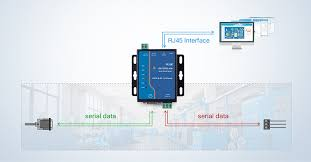
In an interconnected industrial space, it is necessary to connect the traditional serial equipment to the modern network systems. The manufacturing, logistics, and automation industries, still using many RS-232 or RS-485 serial devices, cannot always be directly connected to TCP/IP networks. TCP COM bridges can fit into that gap. You can unite the old technology you have with the new one as well.
Knowing the Function of a Bridge
A TCP COM bridge serves as an interpreter between a network and serial communication. Rather than substituting the old equipment, it expands into LAN or Internet networks. Using intelligent conversion, the serial data is sent in TCP/IP packets, which allows any computer to communicate with the device over the network.
It is not only a matter of convenience but also efficiency and control. The engineers have options of setting up and managing equipment remotely at central workstations, thus minimizing manual processes and avoiding the requirement of direct cable connections.
The Essentials Behind the System
An efficient TCP COM bridge consists of three major elements:
- Serial Device Server (Hardware): This is the basis of the bridge. The equipment is connected to the physical serial equipment via the network using a device that has both a serial and Ethernet port. It monitors the network connections and transmits the serial data in TCP/IP packets, and this ensures good two-way communication.
- Virtual COM Port (Client Side): The software is a virtual port that is opened on the computer of an individual, resembling a real physical port. The operating serial communication protocols can be employed normally, where the information is silently redirected to the network.
- TCP COM Bridge (Server Side): A PC can serve as the server instead of a stand-alone hardware device. The bridge software exposes its local serial port on the network, and therefore, the attached serial device can be accessed by more than one client at the same time.
The Process of Making the Connection
After connecting the serial device to either hardware or a PC, it is then connected to the network through an Ethernet connection. The process of configuring consists of giving the device an IP address and TCP port number. A virtual IP address is created and mapped as a virtual COM port on the client side.
When this virtual port is opened by a serial-based application, this causes a TCP/IP session, and data is transferred transparently in both directions. The server transforms the received TCP data into serial data and vice versa.
This installation ensures that even the older software still works the same way as though the device were hardwired, but now it operates over a flexible network infrastructure.
Uses and Applications
TCP COM bridges have found extensive application in industrial automation systems, point-of-sale systems, and remote monitoring systems. They allow the technicians in Los Angeles, Chicago, or any other place to control PLCs, barcode scanners, and laboratory devices remotely. The system also overcomes physical limitations of the physical COM port, like the unlimited virtual physical port and multiple applications.
AGG Software provides highly sophisticated data communication and monitoring, which facilitates seamless communications between serial and network communications. They offer professional-level RS232, RS485, USB, and Ethernet interface software, making it simple to integrate and control data among a rapidly increasing number of devices. In industrial automation, data logging, and unique monitoring applications, AGG Software provides stability, accuracy, and scalability to any solution.
Why It Is Relevant to the Modern Systems
Connection of old-style serial devices with the network platform removes the necessity of hardware upgrades. It assists companies in continuing as they adjust to the contemporary communication requirements. TCP COM connection can provide remote access, central control, and data flow easily, not interrupting the workflow of a traditional device, bringing it to the digital era.
Conclusion
Serial-to-network communication is no longer a choice but a need in order to keep efficiency in connected environments. An effective TCP COM bridge allows keeping legacy systems up to date, usable, and functional. By using new software systems, organizations are able to integrate their communication infrastructure and maintain the availability of their current equipment.