
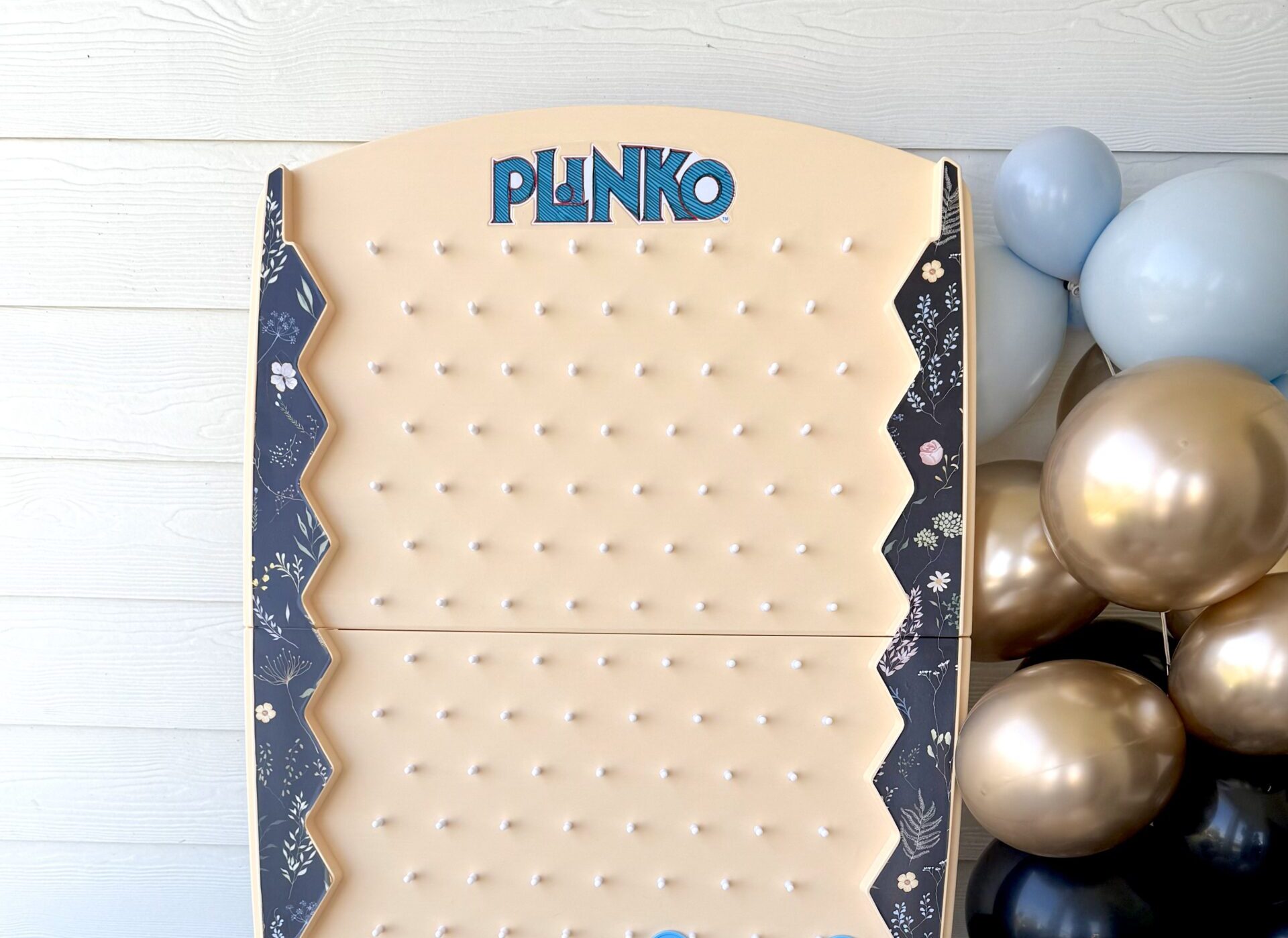
There’s something almost meditative about watching a ball bounce its way down a Plinko board. Each peg it hits sends it left or right in a way that feels completely unpredictable — and yet, beneath all that beautiful chaos, there’s a structure that smart players can absolutely exploit. Plinko, the game that went from a beloved TV game show segment to one of the hottest provably fair casino titles on the planet, is not just a matter of dropping a ball and hoping for the best. Your risk level setting, your row count, your bet sizing — all of these decisions matter enormously. And if you’ve been ignoring them, you’ve essentially been playing a strategy game while wearing a blindfold. Let’s take that blindfold off.
What Makes Plinko Different From Other Casino Games?
Most casino games give you a fixed house edge and a fairly predictable variance profile. Roulette is roulette. Blackjack is blackjack. But Plinko is genuinely unusual because it gives you direct control over your variance through the risk level selector. That’s a rare power. It’s a bit like being handed a car and being told you can choose whether it drives like a sensible family sedan, a sports coupe, or a Formula 1 racing machine — same engine, same track, radically different experience.
The three risk levels — Low, Medium, and High — combined with your choice of rows (usually between 8 and 16) create a massive matrix of possible game configurations. Each configuration has its own multiplier distribution, its own probability profile, and its own psychological demands. Picking the right one isn’t about luck. It’s about understanding yourself as a player and matching the game’s behavior to your actual goals.
Understanding the Plinko Board: A Quick Refresher
In case you need a quick mechanical overview: a Plinko board is a triangular grid of pegs. When you drop a ball from the top, it bounces off pegs as it falls, moving randomly left or right at each contact point. At the bottom, there are buckets — each with a different multiplier value assigned to them. The center buckets typically have the lowest multipliers (sometimes even below 1×), while the edge buckets hold the big prizes. The more rows the board has, the more pegs the ball must navigate, which creates a tighter bell curve of outcomes — meaning more balls land near the center.
This is where the central statistical concept comes in: the binomial distribution. With enough rows, the ball’s path approximates a normal distribution, with the center being the most probable landing zone. That’s not a bug — that’s the entire design philosophy of the game.
Core probability formula for landing in bucket k on an n-row board:
P(k) = C(n, k) × (0.5)^n
Where C(n, k) is “n choose k” — the number of ways to reach bucket k.
For a 12-row board, center bucket probability ≈ C(12,6) × 0.5^12 ≈ 22.6%
The Three Risk Levels Explained
Low Risk — The Tortoise Approach
At Low risk, the multiplier spread is compressed. Your center buckets might pay 0.5×–1×, and your edge buckets might reach 5×–10× on a 16-row board. Sounds modest, right? But here’s the thing — the vast majority of your balls land near the center, and losing less than your full bet on center hits means your bankroll erodes slowly rather than violently. Think of it like investing in bonds instead of penny stocks. Less exciting, far more survivable.
Low risk is ideal for players who want long sessions, want to feel the game without sweating every drop, and are happy to grind toward modest, consistent wins. If your goal is to spend two hours on a platform without blowing through your deposit, Low risk on 8–12 rows is your friend.
Medium Risk — The Sweet Spot Most Players Miss
Medium risk opens the multiplier spread significantly. Edge multipliers can reach 50×–200× depending on row count, while center bucket values might dip to 0.3×–0.5×. This is where the real action lives for recreational players who want meaningful excitement without the cardiac-arrest variance of High risk. The win/loss swings are noticeable — you’ll feel them — but they’re not the kind of swings that wipe out your entire session in four drops.
A large percentage of experienced Plinko players settle on Medium risk with 12–14 rows as their primary configuration. Why 12–14? Because more rows mean more pegs, which creates a tighter distribution — slightly more consistency — while the Medium risk setting keeps the multiplier edges attractive enough to produce genuinely exciting outcomes.
High Risk — For the Bold (and the Disciplined)
Here’s where things get genuinely wild. High risk configurations can show edge multipliers in the hundreds or even thousands — we’re talking 1,000× on some platforms with 16 rows. But — and this is a massive but — center bucket values at High risk can be as low as 0.2× or even 0×. That means a ball landing in the center doesn’t just fail to profit; it actively returns less than nothing.
High risk Plinko is a high-variance, high-drama experience that rewards patience, strict bankroll discipline, and a complete acceptance that most sessions will be losing sessions. The wins, when they come, are spectacular. But they need to be, because they have to compensate for many smaller losses. This isn’t the setting for someone chasing losses or playing with money they can’t afford to lose.
Multiplier Distribution Table by Risk Level (16-Row Board)
| Bucket Position | Approximate Probability | Low Risk Multiplier | Medium Risk Multiplier | High Risk Multiplier |
|---|---|---|---|---|
| Center (0) | ~12.5% | 1.0× | 0.5× | 0.2× |
| Near center (±1) | ~10.9% | 1.1× | 0.7× | 0.3× |
| Mid (±2–3) | ~8.5% | 1.4× | 1.2× | 0.5× |
| Outer mid (±4–5) | ~4.2% | 2.0× | 4.0× | 10× |
| Far edge (±6–7) | ~0.8% | 7.5× | 50× | 300× |
| Hard edge (±8) | ~0.003% | 16× | 200× | 1,000× |
Look at that table for a moment. Notice how the probability of hitting the far edge is less than 1% — but at High risk, it pays 300×. That means out of 100 drops, you might expect roughly one hit there. If you’re betting $1 per drop, 100 drops costs $100. One far-edge hit at 300× returns $300 — but you also need to account for everything else landing in low-multiplier center buckets. It’s a thrilling calculation, but only sustainable with very small bets relative to your bankroll.
Row Count: The Variable Most Players Completely Overlook
Here’s something that doesn’t get nearly enough attention in Plinko discussions: row count matters just as much as risk level, and the two interact with each other in fascinating ways.
8 Rows — Flat Distribution, High Randomness
With only 8 rows, there are 9 possible landing buckets and relatively few peg bounces to create the bell curve effect. The distribution is much flatter than higher row counts — meaning edge hits are proportionally more common. If you’re playing High risk on 8 rows, your edge multipliers are lower (because the probability of hitting them is higher), but you’ll see edge hits far more frequently than on 16 rows. This creates a frenetic, high-turnover experience.
16 Rows — Tight Bell Curve, Rare Extremes
With 16 rows, the bell curve is very pronounced. You’ll land in or near the center the vast majority of the time. Edge hits are rare and feel genuinely special when they occur. On Low risk, this is the ultimate grinding setup — most drops pay close to 1×, giving you an extremely long runway. On High risk, those rare edge hits become genuinely life-changing within a session — but you’ll go a long time between them.
The Row × Risk Matrix
| Configuration | Variance Level | Best For | Session Length |
|---|---|---|---|
| 8 rows + Low risk | Very Low | Pure entertainment, minimal risk | Very long |
| 8 rows + High risk | Medium-High | Frequent edge hits at moderate multipliers | Medium |
| 12 rows + Medium risk | Medium | Recreational balance of fun and profit | Long |
| 16 rows + Medium risk | Medium-High | Experienced players, disciplined bankroll | Medium-Long |
| 16 rows + High risk | Extreme | High-variance hunters, small bet sizing | Short to Medium |
Bankroll Management: The Strategy Behind the Strategy
Every configuration discussion is ultimately meaningless without a serious conversation about bankroll management. This is the part most players skim — and it’s the part that separates players who have sustained enjoyment from players who are furiously reloading their accounts at 11pm wondering where it all went wrong.
Here are the absolute baseline rules, regardless of which risk level you choose:
- The 1% Rule: Never drop a ball that costs more than 1% of your session bankroll. If you’ve loaded $50 for a session, your max bet per drop is $0.50.
- Set a hard stop-loss: Decide before you start — “if I lose 40% of my session bankroll, I stop.” Write it down if you have to.
- Set a take-profit target: Equally non-negotiable. “If I’m up 80%, I cash out.” The game doesn’t care that you’re on a hot streak.
- Don’t adjust risk levels mid-session to chase losses: Switching from Low to High risk because you’re down is one of the most common and most destructive moves in Plinko. The probabilities don’t care about your previous losses.
- Scale drop rate to variance: Higher risk configurations require smaller bets and slower drop rates. Don’t autoplay 100 drops on High risk at $1 each. That’s $100 exposure in seconds.
A Real Case Study: Three Players, Three Approaches
Let’s make this concrete. Here are three fictional but realistic player profiles and how their risk level choice plays out over a $100 session.
Player A — Sarah, Casual Player, Long Session Goal
Sarah sets 12 rows, Low risk, $0.50 per drop. Over 200 drops (a $100 total bet), her average return per drop is approximately $0.49 (assuming ~1% house edge). She ends the session with roughly $98 — a small loss, but she played for nearly 2 hours and had genuine fun. Two of her drops hit outer buckets and paid 5×, creating memorable moments without any account-draining drama.
Player B — Marcus, Experienced Player, Balanced Approach
Marcus plays 14 rows, Medium risk, $1 per drop, with a strict 50-drop session limit. His average return per drop is approximately $0.97. Over 50 drops he spends $50 in bets. He hits one near-edge bucket at 40× (a $40 win) during drop 23, immediately adjusts his stop-loss upward, and finishes the session up $35 after accounting for losing drops. He stops exactly at 50 drops regardless of outcome. This is disciplined, rewarding play.
Player C — Jake, Highroller, Undisciplined
Jake goes 16 rows, High risk, $5 per drop with no stop-loss. He runs 30 drops ($150 exposure) before hitting his first meaningful edge bucket at drop 28 — a 150× hit that returns $750. Exhilarating. But then he keeps playing, increases his bet size, and gives back most of the gain before the session ends. He finishes up $120, but he was up $600 at one point and had no exit strategy. Same risk level as it could have been, wildly worse outcome due to discipline failure.
The lesson from these three stories isn’t which risk level wins — it’s that discipline and configuration alignment with your actual goals is everything.
Choosing Your Configuration: A Step-by-Step Framework
- Define your session goal. Are you here for 2 hours of fun? A specific profit target? A quick spike? Know the answer before you open the game.
- Set your session bankroll. This is money you are fully comfortable losing. Not money you hope to recover. Money you’re fine saying goodbye to.
- Apply the 1% rule to determine your drop size.
- Match risk level to goal: Fun + long session = Low. Balanced excitement = Medium. Big wins, high tolerance for loss = High.
- Choose row count based on desired edge-hit frequency. Want to see edge hits more often (even if smaller)? Go 8 rows. Want rarer but larger edge hits? Go 16 rows.
- Set your stop-loss and take-profit levels before dropping the first ball. Non-negotiable.
- Play. Don’t adjust. Don’t chase. Don’t override your rules.
The Psychology of Plinko: Why Risk Level Feels Personal
There’s a reason Plinko became such a cultural phenomenon — and it’s not just the satisfying sound of a ball bouncing down pegs. The game taps directly into our relationship with uncertainty and control. Watching that ball make its decisions feels simultaneously random and personal. When it drifts toward a big multiplier, your heart rate climbs. When it slides into the center for the eighth time in a row, you feel a specific kind of frustration that’s almost philosophical.
Understanding your emotional response to these outcomes is actually strategic information. If you find center-bucket outcomes genuinely deflating and they affect your subsequent decision-making, you probably need Medium or High risk — because the emotional toll of Low risk’s frequent near-break-even outcomes will drive you toward bad decisions anyway. Self-awareness is not a soft skill in gambling strategy. It’s a hard one.
Summary: Matching Risk Level to Playstyle
- You want long, low-stress sessions: Low risk, 10–14 rows, very small bet sizing
- You want genuine excitement with manageable swings: Medium risk, 12–14 rows, 1% bankroll per drop
- You want maximum multiplier potential and can handle losing streaks: High risk, 14–16 rows, 0.5% bankroll per drop, iron discipline
- You’re a beginner finding your feet: Low risk, 8 rows, minimum bets, focus on understanding the board before worrying about optimization
FAQ — Plinko Strategy
Q: What is the best risk level in Plinko for consistent wins?
There is no risk level that produces consistent wins in the long run due to the house edge — but Low risk on 12–16 rows produces the most consistent session outcomes, with frequent near-break-even results that extend your play time significantly.
Q: Does row count affect the house edge in Plinko?
The house edge (typically 1%–3%) is generally consistent across row counts on reputable platforms. What row count affects is the distribution of outcomes — more rows create tighter bell curves with rarer edge hits but doesn’t technically change the underlying house edge percentage.
Q: Can I use a betting system like Martingale in Plinko?
Martingale (doubling bets after losses) is extremely risky in Plinko due to the high variance, especially at Medium and High risk settings. A losing streak of 6–8 drops — very common at High risk — can quickly push your bet size to table limits or exceed your bankroll. Flat betting with disciplined stop-losses is a far safer approach.
Q: How does provably fair work in Plinko?
Provably fair Plinko uses cryptographic seeds to predetermine ball paths before each drop. Players can verify after the fact that the path was not manipulated mid-drop. This ensures the casino cannot change outcomes once a ball is in motion.
Q: What row count is best for High risk Plinko?
Most experienced High risk players prefer 16 rows because the tight bell curve means edge hits are genuinely rare but carry enormous multipliers — often 500×–1,000×. The trade-off is that center hits at High risk on 16 rows frequently return less than the bet amount (0.2×–0.3×), so strict bet sizing is essential.
Q: Is Plinko purely luck, or does strategy matter?
The individual path of each ball is random. However, the strategic decisions around risk level, row count, bet sizing, and session management are entirely within your control — and these decisions have a significant impact on your results over time. You cannot control where the ball lands, but you can absolutely control the conditions under which it drops.