
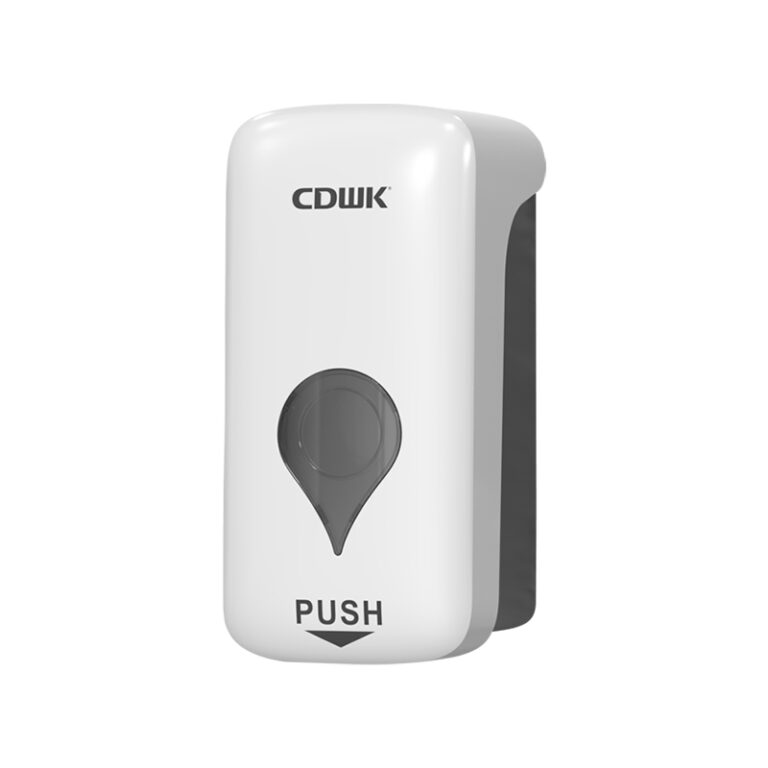
Manual soap dispensers operate on a straightforward principle. A spring-loaded pump mechanism draws liquid soap from a reservoir and dispenses a measured amount through a nozzle when the user presses down on the pump head. The design has changed remarkably little over the decades because it works. There are no batteries to replace, no sensors to calibrate, and no electronics to fail.
The internal components are equally simple. A piston moves within a cylinder, creating suction that pulls soap from the reservoir. A one-way valve ensures that soap flows in only one direction. A return spring resets the pump after each use. These few parts, made from durable plastic or metal, are capable of dispensing thousands of doses before requiring replacement.
This mechanical simplicity is the manual dispenser’s greatest strength. In environments where reliability matters more than novelty, a manual pump that works every time is worth more than a sensor-operated model that occasionally fails.
Where Manual Dispensers Make the Most Sense
Not every restroom benefits from touchless technology. Manual soap dispensers are often the better choice in smaller facilities, older buildings, and locations where maintenance resources are limited. A small office with a handful of restrooms does not need the complexity of electronic dispensers when a simple manual pump will do the job reliably for years.
Manual dispensers are also common in industrial settings, workshops, and outdoor facilities where exposure to dust, moisture, and temperature extremes can damage electronic components. In these environments, a mechanical pump that keeps working regardless of conditions is a practical necessity.
Cost is another consideration. Manual soap dispenser typically cost a fraction of what sensor-operated models command, and they do not require batteries or power connections. For facilities managing tight budgets across multiple restrooms, the savings can be substantial.
The Bulk vs. Sealed Cartridge Debate
Manual soap dispensers generally fall into two categories: bulk-fill models and sealed-cartridge models. Each has distinct advantages, and the right choice depends on the facility’s priorities.
Bulk-fill dispensers are refilled from large containers of liquid soap. They are economical, generate less plastic waste, and give facility managers flexibility in choosing soap products. However, refilling can be messy, and there is a risk of contamination if the dispenser is not cleaned properly between refills.
Sealed-cartridge dispensers use factory-filled soap cartridges that snap into the dispenser. The soap stays sealed until the moment it is dispensed, reducing the risk of contamination. Cartridge changes are clean and quick, requiring no pouring or measuring. The trade-off is higher cost per dose and more plastic waste.
Healthcare facilities, food service operations, and childcare centers often prefer sealed cartridges because of the hygiene advantages. Offices, schools, and industrial facilities may find bulk-fill dispensers more economical.
Material and Finish Considerations
Manual soap dispensers are available in a range of materials, each with its own characteristics. Plastic dispensers are lightweight, inexpensive, and resistant to many chemicals, making them a practical choice for most applications. They are also available in a wide range of colors and finishes.
Stainless steel dispensers offer superior durability and a premium appearance. They resist corrosion and are easy to clean, making them suitable for high-traffic restrooms and healthcare environments. The brushed or polished finish complements modern restroom design.
Chrome-plated dispensers provide a shiny, reflective finish that works well in hospitality settings. However, chrome can show fingerprints and water spots more readily than brushed stainless steel, requiring more frequent cleaning to maintain its appearance.
Dispensing Volume and Soap Formulation
The amount of soap dispensed per press is an important consideration that is often overlooked. Dispensers that release too much soap waste product and create mess. Dispensers that release too little force users to pump multiple times, which increases wear on the mechanism and frustrates users.
Most manual dispensers are designed to deliver approximately 0.5 to 1 milliliter per stroke, which is sufficient for effective handwashing. Some models offer adjustable dosing, allowing facility managers to fine-tune the volume based on the soap formulation and user preferences.
Soap viscosity also matters. Thick, gel-like soaps may not flow properly through dispensers designed for thinner liquids. Facilities should verify that their chosen soap is compatible with their dispensers to avoid clogs and dispensing problems.
Maintenance and Longevity
Manual soap dispensers require minimal maintenance compared to electronic models, but they are not maintenance-free. Regular cleaning prevents soap buildup around the nozzle, which can clog the dispenser and create an unsightly mess. Periodically checking the pump mechanism for wear ensures reliable operation.
When a manual dispenser does fail, repair or replacement is typically straightforward. The pump assembly can often be replaced without removing the entire unit from the wall. This modularity extends the service life of the dispenser and reduces the cost of ownership over time.
A Reliable Fixture in an Increasingly Complex World
In an era when restroom fixtures are becoming increasingly connected and automated, the manual soap dispenser remains a reliable, straightforward solution. It does not need firmware updates or battery replacements. It does not require a network connection or a mobile app. It simply dispenses soap when someone presses the pump, day after day, year after year. For many facilities, that reliability is exactly what they need.