
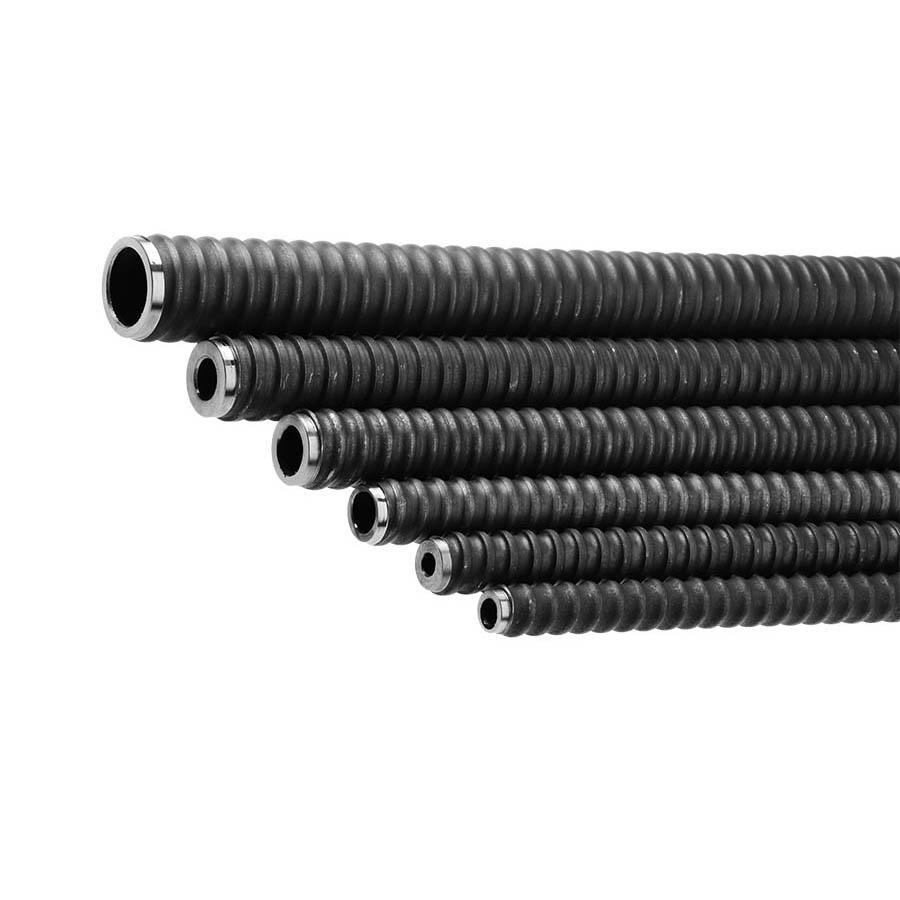
Every foreman has a story about the job that went sideways, and it usually starts the same way: the ground wasn’t what the report said it was. Methods that work fine in good ground start failing, the schedule slips, and everyone starts looking for something that actually works in the mess they’re standing in. That’s the moment the self drilling rock anchor usually enters the conversation — not as a fancy upgrade, but as the thing that gets the job moving again.
Here are the five jobsite problems the self drilling rock anchor solves better than anything else in the toolbox.
1. The Borehole That Won’t Stay Open
Collapsing ground is the classic case: sand, gravel, fill, heavily fractured rock. Drill a hole with conventional tools and it caves in before the bar goes in, so you drill it again with casing, and then again. A self drilling rock anchor never leaves an open hole — the bar is the drill string, and grout follows immediately through the hollow core. The ground never gets a chance to collapse because there is nothing empty to collapse into. On running ground, this alone can save days of re-drilling.
A road-widening project in weathered granite showed the difference clearly. The contractor’s first attempt with cased holes lost two full days to collapses and re-drills on a single row of anchors. After switching to the self drilling rock anchor, the same crew finished the next row in one shift — same ground, same rig size, no casing handled at all.
2. The Tunnel Face That Can’t Wait
In tunneling, the excavation cycle is everything. Forepoling and face bolts have to go in fast or the whole drive slows down. Because a self drilling rock anchor installs in a single pass — drilling and grouting without tripping casing in and out — crews shave minutes off every bolt. Multiply that across hundreds of bolts and the schedule difference is real. Tunnel crews were among the earliest adopters of the self drilling rock anchor, and they didn’t switch for novelty: they switched because meters per shift went up.
3. The Slope That’s Already Moving
Emergency slope work doesn’t wait for ideal conditions. When a cutting starts slipping after heavy rain, anchors need to go in now, into whatever the slope is made of — usually saturated, disturbed material that won’t hold an open hole for love or money. A self drilling rock anchor drives straight into that mess and grouts as it goes, tying the slip surface back before the next storm hits. It’s the difference between stabilizing the slope and standing there watching it.
Speed matters here because the working window is short: the next rainfall could finish what the first one started. Conventional methods need dry, stable conditions to case a hole — exactly what you don’t have on a slipping, saturated slope. The single-pass installation is what makes emergency response possible at all.
4. The Site With No Room to Work
Basement underpinning, urban retaining walls, micropiles beneath an existing building — restricted-access sites rule out big rigs and long casing strings. A self drilling rock anchor breaks down into short bars joined by couplers, so it runs on compact, low-headroom equipment that fits where conventional setups can’t go. Even with two meters of headroom, the anchor still reaches full design depth; it just gets there in sections.
The equipment gets smaller but the engineering doesn’t: couplers maintain full load transfer between bar sections, and the grout column is continuous regardless of how many bars were joined. Clients sometimes assume a sectional anchor is a compromise. It isn’t — it’s the same anchor, delivered in pieces.
5. Water in All the Wrong Places
A high water table or water-bearing fractures can turn conventional grouting into an exercise in washing grout away. With a self drilling rock anchor, grout is pumped through the bar under pressure from the bottom up, pushing water ahead of it instead of mixing with it. Pair that with the right mix design and the anchor sets up solid in ground where a conventionally grouted bar would have lost half its grout to the water.
The mix design does heavy lifting here. Thixotropic grouts that stiffen once pumping stops, and accelerators where the water flow is aggressive, turn a self drilling rock anchor into a reliable installation even below the water table. Talk to the grout supplier about the groundwater conditions before the first bar goes in — it’s a five-minute conversation that prevents a week of problems.
The Common Thread
Notice what these five share: none of them is about the anchor being stronger on paper. The self drilling rock anchor wins on installation — it gets into ground that fights back, in conditions where the old method stalls. Where the site is straightforward and the ground is kind, conventional anchors do fine. It’s the other eighty percent of jobsites where the self drilling design earns its keep.