
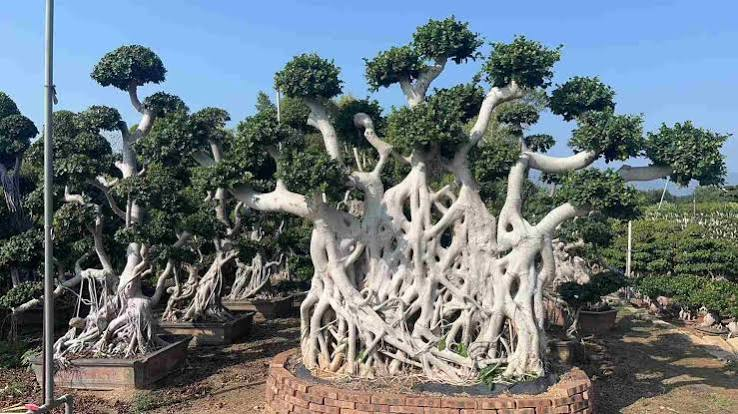
The S curve is not an arbitrary design. It is inspired by the natural growth habits of trees in the wild, which rarely grow perfectly straight. Wind, light, gravity, and the competition for space cause trunks to bend and twist over time. In traditional Asian art, this natural imperfection became something to celebrate and replicate. The S shape, or “curved trunk” style, captures that organic movement in a controlled form.
In ficus bonsai specifically, the S shape serves a practical purpose as well. Ficus species are vigorous growers with flexible young trunks that respond well to wiring. Training a ficus into an S shape allows growers to create a dynamic, visually interesting tree relatively quickly compared to slower-growing species.
Choosing the Right Ficus
Not every ficus is equally suited to S-shape training. The most common choice is Ficus microcarpa, also known as Chinese banyan or ginseng ficus. This species produces thick, aerial-root-like trunks with natural curves that already resemble the S form. Its small leaves and vigorous growth make it ideal for bonsai cultivation.
Ficus benjamina, the weeping fig, can also be trained into an S shape, though its thin, flexible branches require more careful handling. Ficus retusa, another popular species, produces excellent trunk movement and responds well to wiring.
The key characteristic to look for is a trunk that is still flexible enough to bend without breaking. Once a ficus trunk lignifies and becomes rigid, bending it becomes dangerous and risks snapping the wood.
How the Training Process Works
Creating an S-shaped ficus is a multi-step process that unfolds over months and years. The first step is selecting a young tree with a healthy trunk that is thick enough to hold a curve but still flexible. The grower then wraps the trunk with wire, typically aluminum or copper, at a forty-five-degree angle. The wire provides the mechanical support needed to hold the trunk in its new position while the wood slowly adapts.
Once wired, the trunk is gently bent into the first curve. The bend is made gradually and carefully, using both thumbs to support the inside of the curve while the fingers push the trunk into position. The second curve is then created in the opposite direction, completing the S shape. The tree is then left to grow for several months while the trunk thickens and sets into its new form.
After the wire is removed, the tree continues to grow, and the curve becomes permanent as the wood lignifies. If the trunk begins to straighten, additional wiring may be needed to maintain the shape. Over time, the tree’s branches are pruned and trained to create a balanced canopy that complements the curved trunk.
The Importance of Timing
Timing is critical when training a ficus S shape. The best time to wire and bend a ficus is during the growing season, typically spring or summer, when the tree is actively producing new growth and the wood is most flexible. Bending a ficus during its dormant period is riskier because the wood is more brittle and prone to snapping.
The grower should also avoid bending a trunk that has been recently repotted, as the roots need time to recover. A healthy, well-established tree is far more likely to tolerate the stress of bending than one that is already stressed.
Common Mistakes to Avoid
One of the most common mistakes when creating a ficus S shape is bending too aggressively. The curve should be gradual, not sharp. A sharp bend can create a kink in the trunk that never fully heals and can weaken the tree. Another mistake is leaving the wire on for too long, which can cause the wire to bite into the bark as the trunk grows. The wire should be checked regularly and removed before it begins to cut into the wood.
Overwatering is another frequent issue with ficus bonsai. While the tree is recovering from wiring and bending, it should be kept slightly drier than usual to reduce the risk of root rot. Once the tree is established, normal watering can resume.
The End Result
A well-trained ficus S shape is a thing of beauty. The trunk curves gracefully from the soil line, the branches balance the composition, and the leaves create a dense, healthy canopy. It is a form that works equally well as a bonsai specimen or as a larger indoor tree. With patience and consistent care, almost any ficus can be trained into this elegant shape, making it one of the most rewarding projects for growers who want to create something truly unique.