
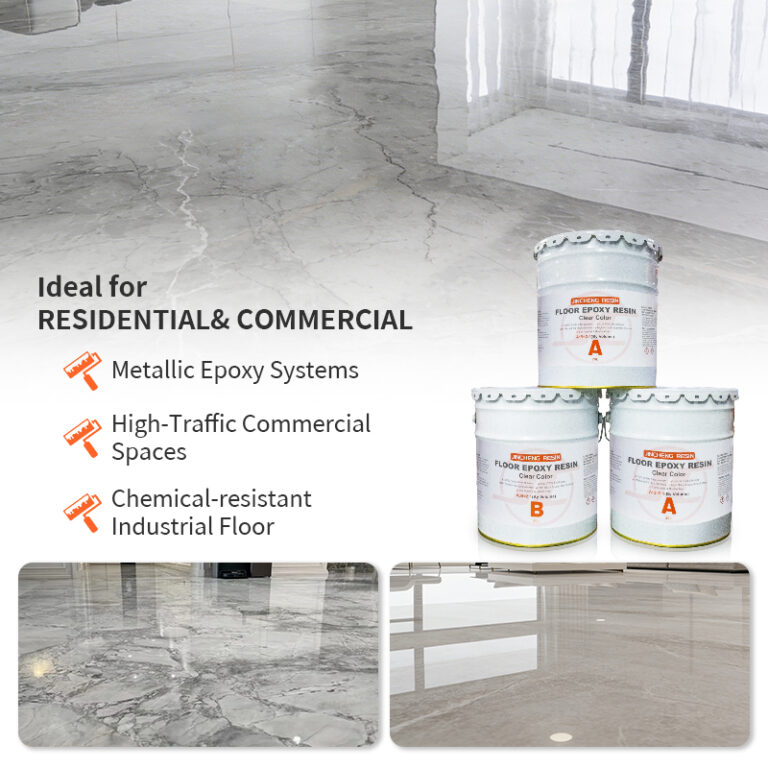
Natural marble is the benchmark that marble epoxy coating tries to emulate. It is quarried stone, cut and polished into slabs or tiles. Its beauty is undeniable, and its depth and translucency cannot be fully replicated by any synthetic material.
The trade-offs are significant. Natural marble is heavy, requiring structural support that may not exist in all buildings. It is expensive, particularly for large areas or rare varieties. It is porous and prone to staining, especially from acidic substances like wine, citrus, and vinegar. It requires regular sealing and careful maintenance. It can crack or chip under impact, and repairs are difficult to conceal.
Marble epoxy coating addresses these weaknesses. It is lightweight, less expensive, and resistant to staining and etching. It is seamless, eliminating grout lines. It can be repaired or recoated without removing the entire surface. The appearance is different from natural marble, but for many applications, the practical advantages outweigh the aesthetic compromise.
Marble Epoxy Coating vs. Porcelain Tile
Porcelain tile is a popular alternative for floors and walls. It is durable, water-resistant, and available in a wide range of colors and patterns, including tiles that mimic marble.
The main drawback of porcelain tile is the grout. Grout lines collect dirt and bacteria, require periodic sealing, and are difficult to clean thoroughly. In food service and healthcare environments, this is a significant disadvantage. Tile can also crack if the substrate moves, and replacing individual tiles can be difficult if the original style is discontinued.
Marble epoxy coating offers a seamless alternative. There are no grout lines to clean or seal. The surface is continuous, which makes it easier to maintain and more hygienic. It is also warmer underfoot than tile, which is a consideration in residential applications.
The trade-off is that marble epoxy coating is not as hard as porcelain. It can scratch under heavy abrasion, though the topcoat provides significant protection. It also requires a skilled applicator, whereas tile installation is a more standardized process.
Marble Epoxy Coating vs. Luxury Vinyl
Luxury vinyl tile and plank have become popular for their affordability, ease of installation, and realistic wood and stone patterns. They are comfortable underfoot, water-resistant, and easy to clean.
The limitations of luxury vinyl are durability and longevity. It can dent under heavy loads, fade in sunlight, and peel at the edges if not properly installed. It is not suitable for all commercial environments, particularly those with heavy traffic or chemical exposure.
Marble epoxy coating is more durable and longer-lasting. It bonds directly to the substrate, so it does not peel or lift. It resists chemicals and abrasion better than vinyl. It can be customized in ways that vinyl cannot, with unique veining patterns and metallic effects.
The trade-off is installation complexity and cost. Marble epoxy coating requires a skilled applicator and a multi-step process. Luxury vinyl can be installed quickly by a wider range of contractors.
Marble Epoxy Coating vs. Polished Concrete
Polished concrete is a popular choice for industrial and commercial spaces. It is durable, low-maintenance, and has a modern, minimalist aesthetic. It is created by grinding and polishing the existing concrete slab.
The appearance of polished concrete is very different from marble epoxy. It has a raw, industrial look rather than a decorative stone look. It can be stained or dyed, but the range of colors and patterns is limited compared to epoxy.
Marble epoxy coating offers more design flexibility. It can mimic marble, create custom patterns, and incorporate metallic or pearlescent effects. It also provides a more uniform surface, hiding imperfections in the concrete that polished concrete would reveal.
The trade-off is that polished concrete is more abrasion-resistant than epoxy. It does not scratch or wear in the same way. It also does not require a coating that can peel or delaminate. For environments where durability is the primary concern and appearance is secondary, polished concrete may be the better choice.
Marble Epoxy Coating vs. Other Resin Systems
Epoxy is not the only resin used for decorative flooring. Polyurethane and polyaspartic coatings are also used, sometimes in combination with epoxy.
Polyurethane topcoats are often used over epoxy because they offer better UV stability and abrasion resistance. Polyaspartic coatings cure faster and can be applied at lower temperatures. They are popular for garage floors and commercial applications where downtime must be minimized.
Marble epoxy coating systems often incorporate these other resins as topcoats. The decorative layer is epoxy, and the protective layer is polyurethane or polyaspartic. This combination leverages the strengths of each material.
The Bottom Line
Marble epoxy coating is not the right choice for every application. It competes with natural stone, porcelain tile, luxury vinyl, polished concrete, and other resin systems, each of which has its own strengths and weaknesses. The best choice depends on the specific requirements of the project: the desired appearance, the durability required, the maintenance regime, the budget, and the skill of the available applicators. Understanding these trade-offs is essential to making a decision that delivers satisfaction over the long term.