
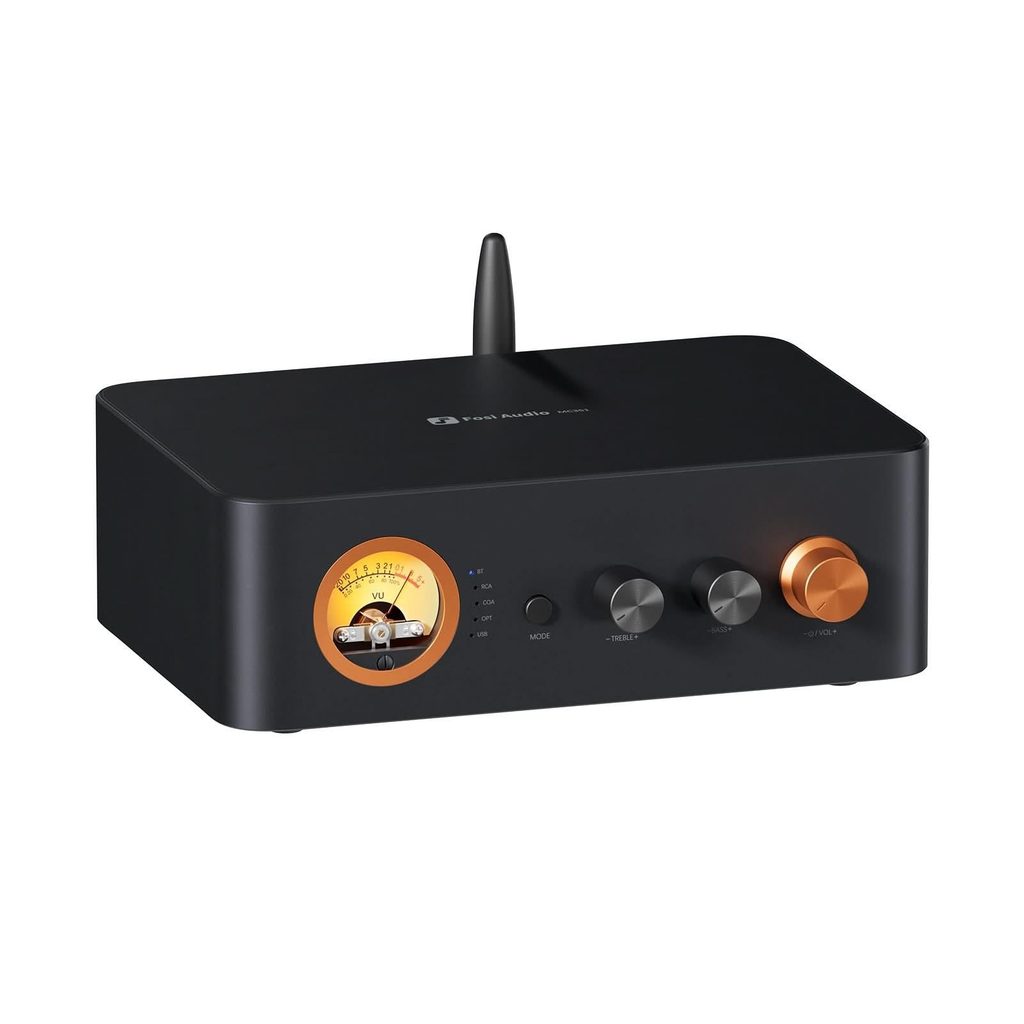
Shopping for an integrated amplifier can feel like comparing apples to spaceships. Prices range from pocket money to a small car, wattage numbers are everywhere, and every model boasts a different feature list. This guide cuts through the noise and focuses on what actually matters when you buy.
The short version: match power to your speakers, buy the inputs you will use, and spend the rest of your budget on build quality — not on features that look good in a brochure.
Power: enough, with room to spare
Wattage is the first number everyone checks and the easiest to misunderstand. What matters is continuous power into your speakers’ impedance, measured at low distortion — not a peak figure quoted under friendly conditions. A rating of 50 honest watts will drive most bookshelf speakers happily; 100 watts suits larger rooms and less efficient speakers.
Headroom is the real goal. An integrated amplifier running comfortably below its limit sounds relaxed and clean, while one pushed near its ceiling on every loud passage sounds strained. As a rule, buy a little more power than your normal listening requires, and you will rarely think about power again.
Inputs: buy what you will actually use
Count your sources before you shop. A turntable needs a phono input (or a separate phono stage). A TV needs an optical or coaxial digital input. A streamer or computer can use USB, coaxial, or analogue. Bluetooth is convenient for guests and quick listening, though serious sessions usually go wired.
It is tempting to pay for every input available, but unused inputs are just cost. Make a list of the sources you own today plus one you realistically plan to add, and buy for that list. An extra analogue input or two costs little and covers future additions without paying for exotic connections you will never touch.
Features that earn their keep
A subwoofer output is the single most useful future-proofing feature: it lets you add bass later without replacing the unit. Tone controls or a loudness function help in rooms that are bright or bass-shy. A good remote, a clear display, and a headphone output for late-night listening all get used far more than flashy extras.
On the other hand, be sceptical of features that sound impressive but solve problems you do not have. Multi-room protocols you will never set up, exotic digital filters, and app control that duplicates the remote are all fine — just do not pay a premium for them unless you know you will use them.
When you have a shortlist, comparing models side by side helps enormously. A browsable integrated amplifier range lets you line up power ratings, input sets, and prices in one place instead of jumping between a dozen product pages.
Build quality and reliability
Weight is a crude but useful signal: a solid power supply and chassis add heft. Check owner reviews for long-term reliability — humming transformers, flaky remotes, and overheating are the complaints that matter, and they rarely show up in launch reviews. A generous warranty is worth more than a glossy finish.
Finally, buy from a seller with a fair return policy. Room acoustics and personal taste cannot be judged from a spec sheet, and a week of listening at home tells you more than any review. If it sounds right in your room, it is right.
New vs used: where the value is
Buying new brings warranty, a fresh remote, and the comfort of a return window. For a first system, that peace of mind is worth real money, especially if you are still learning what you like.
Used gear is where the bargains live. A well-kept integrated amplifier from a respected maker can cost half its new price and sound identical — audio electronics age gracefully when treated well. Check the seller’s reputation, ask about service history, and test every input and control before paying.
Watch for wear: scratchy volume controls, humming transformers, and tired displays are the usual complaints. Most are fixable, but factor repair costs into the price. Avoid units with modified internals unless you know exactly what was changed.
A smart middle ground is ex-demo or refurbished stock from a dealer: near-new condition, full warranty, and a meaningful discount. Whatever route you choose, an integrated amplifier bought carefully — new, used, or refurbished — will serve you for years, and the money saved can go toward better speakers.
One last tip: keep the original box and manual if you buy new. An integrated amplifier in its original packaging sells faster and for more money when you eventually upgrade, which makes your next system cheaper too.
Buy power with headroom, inputs you will use, and a build you can trust — in that order. Do that, and the box you bring home will quietly do its job for years while you get on with enjoying the music.