
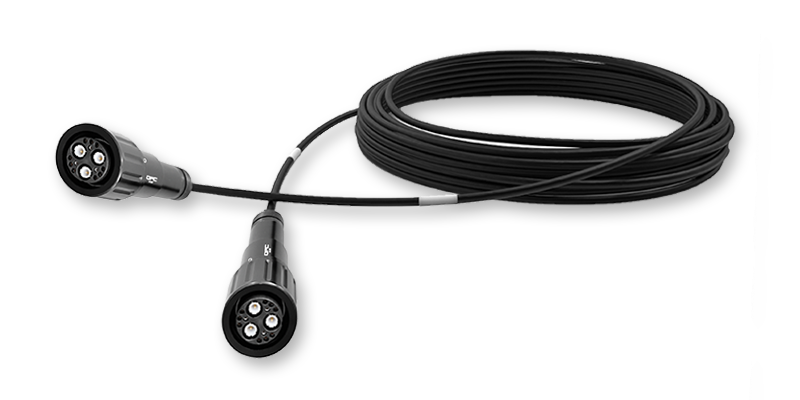
Managing separate power and data cables can cause a chaotic mess when multitasking with several devices or complicated network configurations. You may have stumbled over wires, battled cluttered setups, or have concerns about losing the signal, common headaches of the industry. That’s typically when the concept of a hybrid cable is mentioned, offering to simplify matters with one cable.
In this article, we will explain what a hybrid cable is, the power and data transmission technology it incorporates, and why it is now the preferred choice for residential and commercial applications. You will find information on the design, advantages, and applications of EM modules that help you to know if this is the solution you want to pursue with your application!
High-Speed Data
A hybrid cable is capable of carrying high-speed data over its data cores without interference. By combining more signal pathways inside a single jacket, it provides reliable stability when traveling with internet, video, or audio signals. That makes it perfect for situations where you need a steady stream of fast data, like in an office network or a smart home arrangement.
Hybrid cables differ from conventional cables in that they carry power as well as data, eliminating the need for separate cables for power and data, which streamlines things and makes things more efficient. They are engineered to reduce crosstalk and attenuation, so you can count on receiving the speed and reliability your devices demand.
Reliable Power Delivery
Among the advantages of hybrid cables is that they can carry power as well as data. This reduces the need for separate power cables and makes installation easier with less clutter. Powered Devices can now get their power over the same cable that they use for data, making life easier for those running commercial or home networks.
Hybrid cables are designed to carry the electrical current without overheating or disturbing the data signals. This guarantees long-term performance and safety, a principle of which is crucial, especially in a multi-device environment.
Durable Material Construction
Durability is an essential parameter for every cable, and hybrid cables are no exception to this rule. Such cables have usually reinforced outer jackets made of high-quality materials such as thermoplastic elastomers, thermoplastic rubber, or thermoplastic urethane, which provide resistance against abrasion, water, and ultraviolet light. So they are suitable for indoor use, and use in controlled outdoor environments.
The design also allows for flexibility without losing strength, making it possible to be guided through tight spaces or bent around corners. You get a cable that doesn’t just work well, but that can take the abuse of being used in the real world.
Versatile Application Use
Hybrid cables are so versatile that they can be used in many different applications. From supplying energy to security cameras as they send video signals to intelligent lighting, industrial equipment, or network configurations, these cables perform their multiple duties in a single bundle.
This multi-functionality eliminates the need to run several types of cables, making management easier and reducing costs. Whether for commercial use or high-end home networks, a hybrid cable is a simple and effective way to hook up several devices.
Conclusion
In the busy world today, efficiency and reliability are important, and hybrid cables offer them both. They combine power and data transmission in one rugged cable, minimizing clutter in the work environment while delivering high performance. If you want the convenience of an easy installation without compromising quality, hybrid cable is the way to go.
With knowledge of their design, advantages, and real-world use, it can be easier to identify when to use them for your network or device setup. When using hybrid cable,s you are not just enjoying more convenience, you’re also future-proofing your installations for reliable use long into the future.