
Navigating Australian roads can be challenging enough without the added confusion of parking signs. Whether you’re a new driver, recently moved to Australia, or simply want to avoid costly mistakes, understanding parking signs is essential. With Australians spending over $1.2 billion on parking fines in just two years, it’s clear that many drivers struggle with interpreting these important traffic control devices.
This comprehensive guide will help you decode Australian parking signs, understand the rules, and keep your hard-earned money in your pocket instead of paying avoidable fines.
Why Understanding Parking Signs Matters
Parking signs in Australia might seem straightforward at first glance, but they can be surprisingly complex. The combination of time restrictions, day-specific rules, and multi-panel signs often leaves drivers confused and vulnerable to penalties. Recent data shows that over 822,000 parking infringements were issued in New South Wales alone during the 2023-24 financial year, representing a significant increase from previous years.
The consequences of misreading a parking sign extend beyond just the immediate fine. Unpaid parking violations can affect your credit score, increase your car insurance premiums, and result in additional late payment penalties. Understanding how to properly read and interpret parking signs is one of the most practical skills every Australian driver should master.
The R5 Parking Series: Australia’s Standard Regulatory Signs
Australian parking regulations follow a standardized system known as the R5 Parking Series. These regulatory signs are part of the Australian Standard AS 1742.11, which governs parking controls across the country. The R5 series includes everything from time-limited parking signs to no-stopping zones, disabled parking spaces, and loading zones.
For a comprehensive visual guide to all Australian parking signs, the R5 series provides detailed specifications that ensure consistency across all states and territories. These standardized signs use specific colors, fonts, and layouts that make them instantly recognizable once you understand the system.
The beauty of the R5 system is its uniformity. Whether you’re parking in Sydney, Melbourne, Brisbane, or Perth, the signs follow the same design principles and regulations. This standardization means that once you learn to read these signs properly, you can confidently park anywhere in Australia.
Common Types of Parking Signs You’ll Encounter
Time-Restricted Parking Signs
The most common parking signs you’ll see are time-restricted indicators like 1P, 2P, or 4P. The number represents the maximum hours you can park in that spot, while the “P” stands for parking. These signs typically have a white background with green or black text, making them easy to spot from your vehicle.
When you see a 1P sign, you can park for up to one hour before you must move your vehicle. A 2P sign allows two hours of parking, and so on. Some signs include additional information below the time limit, such as specific days or times when the restriction applies. For example, you might see “1P 8AM-6PM Mon-Fri,” which means the one-hour limit only applies during business hours on weekdays.
No Parking and No Stopping Signs
These are two distinct regulations that many drivers confuse. A “No Parking” sign, typically featuring red text on a white background with a red diagonal line, means you cannot park your vehicle in that location. However, you can stop briefly to pick up or drop off passengers or goods, as long as you don’t leave your vehicle unattended.
A “No Stopping” sign is more restrictive. With its red circle and diagonal line over the word “STOPPING,” it means you cannot stop your vehicle at all, even for a moment. These signs are typically placed near intersections, pedestrian crossings, or other locations where any vehicle presence could create safety hazards. Violating no-stopping rules can result in fines of up to $330 and demerit points.
Loading Zones
Loading zones are designated areas primarily for commercial vehicles making deliveries or pickups. These zones usually display signs indicating “Loading Zone” with specific time restrictions. While these zones are designed for business use, regular passenger vehicles can sometimes use them depending on local regulations.
The key is to check the fine print on the sign. Some loading zones specify they’re only for goods vehicles or commercial vehicles. Others might allow any vehicle to stop for loading or unloading. Time limits typically range from 15 to 30 minutes, and you must be actively loading or unloading during this time.
Disabled Parking Spaces
Disabled parking spaces are among the most strictly enforced parking regulations in Australia. These spaces feature the internationally recognized wheelchair symbol and are reserved exclusively for vehicles displaying a valid disability parking permit. Parking in these spaces without proper authorization can result in fines up to $704 and significant demerit points in some states.
These spaces are wider than standard parking spots to accommodate wheelchair access and mobility equipment. They’re typically located closest to building entrances for accessibility. Even if a space appears empty and you only plan to stop briefly, never park in a disabled spot without a valid permit.
How to Read Multi-Panel Parking Signs
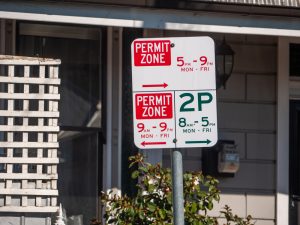
Multi-panel parking signs can appear intimidating, but they follow a logical top-to-bottom reading structure. The top panel typically indicates the main restriction, while lower panels provide specific conditions such as days, times, or vehicle types.
When approaching a multi-panel sign, start at the top and read downward. For example, you might see “2P” at the top, followed by “9AM-6PM” in the middle panel, and “Mon-Fri” at the bottom. This tells you that you can park for up to two hours, but only between 9 AM and 6 PM, and only on weekdays. Outside these specified times and days, different rules may apply, or parking might be unrestricted.
Understanding Directional Arrows
Arrows on parking signs indicate which direction the restriction applies. A right-pointing arrow means the rule applies from the sign onwards in the direction of the arrow. A left-pointing arrow indicates the restriction covers the area before the sign. Arrows pointing in both directions mean the rule applies on both sides of the sign.
When there’s no arrow on a sign, the restriction typically applies only to the space immediately in front of that specific sign. This is why you’ll often see multiple parking signs along a street, each indicating where different zones begin and end.
Special Parking Considerations
Clearways and School Zones
Clearways are sections of road where stopping is prohibited during specified times to maintain traffic flow. These are common on main roads during peak hours. The signs clearly state “Clearway” along with the times and days when the restriction applies. During these periods, no vehicles can stop for any reason.
School zones have their own parking restrictions that operate during school hours. Parking violations in school zones account for approximately 24% of all parking fines issued, according to Transport for NSW data. The rules in these areas are strictly enforced for child safety, and stopping even briefly in prohibited zones can result in immediate fines.
Permit Parking Areas
Many residential areas in Australian cities have permit parking zones. These areas require vehicles to display a valid parking permit issued by the local council. The signs typically indicate “Permit Holders Only” along with the specific times when permits are required.
If you’re a resident in a permit zone, you can usually apply for a permit through your local council. Visitor permits are also available in many areas for temporary parking needs. Always check the signs carefully, as some permit zones only operate during business hours, while others are enforced 24/7.
Tips for Avoiding Parking Fines
Always Check Signs Carefully
Before leaving your vehicle, take a moment to check all nearby parking signs. Look in both directions along the street, as restrictions can change within a short distance. Pay attention to signs on poles, walls, and even painted on the road surface.
If you’re unsure about a sign’s meaning, it’s better to find alternative parking than risk a fine. Trees, bushes, or other obstructions sometimes partially hide signs, but this won’t be accepted as a valid excuse if you’re fined.
Set Reminders for Timed Parking
When parking in a timed zone, set an alarm on your phone to remind you when your parking period is about to expire. Give yourself a buffer of at least 10 to 15 minutes to return to your vehicle. Parking enforcement officers don’t provide grace periods, and being even a few minutes late can result in a fine.
Keep Digital Records
If you’re using paid parking or meter parking, take a photo of the parking meter receipt and the surrounding signs. If you later receive a fine that you believe is incorrect, these photos can serve as valuable evidence when contesting the infringement.
Understand Your Local Area
Different councils and municipalities can have slightly different parking enforcement practices. Familiarize yourself with the common parking zones in areas you frequently visit. Many local councils now offer parking information apps that can help you locate legal parking spots and understand local restrictions.
What to Do If You Receive a Parking Fine
If you believe you’ve received a parking fine in error, you have the right to contest it. Data shows that approximately 23% of challenged parking fines were either withdrawn or reduced in 2024. To successfully appeal a fine, you’ll need to gather evidence such as photographs of the parking signs, your vehicle’s position, and any receipts or digital records.
Contact your local council or the authority that issued the fine as soon as possible. Most jurisdictions have specific timeframes for lodging appeals. Be polite and factual in your appeal, clearly explaining why you believe the fine was issued incorrectly. Include all supporting evidence and be prepared to potentially appear in court if your case is escalated.
Regional Variations and Local Regulations
While the R5 Parking Series provides standardization across Australia, individual councils can implement additional restrictions or variations within their jurisdictions. Major cities like Sydney, Melbourne, and Brisbane often have more complex parking systems due to higher population density and traffic volume.
For instance, Brisbane City Council issued over 170,000 parking fines in the 2023-24 financial year, generating $34.35 million in revenue. The City of Sydney has moved to a paperless parking permit system as of 2025, requiring all permits to be digital. These local variations make it important to check specific council websites when parking in unfamiliar areas.
The Cost of Getting It Wrong
The financial impact of parking fines can be substantial. Penalties range from around $116 for basic infringements to over $700 for serious violations like parking in disabled spaces without authorization. In NSW, some parking fines have increased significantly, with certain illegal parking violations now costing up to $789 as of January 2025.
Beyond the immediate fine, repeated parking violations can lead to increased car insurance premiums, especially if they involve demerit points. Unpaid fines accumulate additional late payment fees and can eventually affect your credit rating, potentially impacting your ability to secure loans or rental properties.
Making Parking Easier: Modern Solutions
Many Australian cities now offer smartphone apps that help drivers locate available parking, pay for parking digitally, and receive notifications when their parking time is about to expire. These apps can significantly reduce the risk of overstaying your welcome in timed zones.
Digital parking systems also provide instant receipts and payment records, which can be useful if you need to contest a fine. Some apps even provide real-time information about parking restrictions and available spaces, making it easier to find legal parking quickly.
Key Takeaways for Safe Parking
Understanding Australian parking signs doesn’t have to be complicated. By familiarizing yourself with the R5 Parking Series standards, reading signs carefully from top to bottom, and paying attention to directional arrows and time restrictions, you can significantly reduce your risk of receiving a fine.
Remember that parking signs exist primarily for traffic management and safety. They help ensure fair access to parking spaces, maintain traffic flow, and protect pedestrian safety. While they might sometimes seem overly restrictive, following these rules protects both you and other road users.
Whether you’re a daily commuter, weekend shopper, or occasional driver, taking time to understand parking signs is a worthwhile investment. With parking fines costing Australian drivers hundreds of millions annually, proper knowledge of parking regulations can save you significant money and stress.
By staying informed, checking signs carefully, and planning ahead, you can navigate Australia’s parking systems with confidence and keep your driving record clean.