
Table of Contents
- Assess Safety and Crime Rates
- Evaluate Proximity to Essential Amenities
- Investigate School Quality
- Observe Community Engagement
- Analyze Property Values and Market Trends
- Consider Future Development Plans
- Visit at Different Times
Choosing the right neighborhood is as crucial as selecting the perfect home, and in many cases, it can have an even greater long-term impact. A well-suited community not only enhances your immediate lifestyle and day-to-day comforts but also plays an essential role in ensuring safety, fostering a sense of belonging, and building connections with neighbors. Moreover, the neighborhood you choose can significantly influence your property’s future value, determining your ability to build equity and secure strong returns on your investment should you decide to sell. Navigating these important factors can be overwhelming, which is why engaging with experienced real estate professionals, such as Waikoloa real estate agents RE/MAX Honolulu, can provide nuanced insights into a neighborhood’s unique characteristics. RE/MAX Honolulu is a full-service real estate brokerage firm founded in December 1994, designed and created by top producers for top producers, independently and jointly committed to quality service, exceptional integrity, and premier market presence. Over the years, they have become the destination for experienced, productive real estate professionals in Hawaii, assisting clients in highly sought-after areas such as Kakaako, Waikoloa, Poipu, and more. Relying on trusted experts like those at RE/MAX Honolulu can help you navigate local market trends, school zones, and the subtle aspects that define a neighborhood’s appeal.
Assess Safety and Crime Rates
Safety is paramount when selecting a neighborhood, as it affects your personal peace of mind and your family’s well-being. It is advisable to utilize local police department websites or reliable crime-tracking tools to evaluate crime statistics and get a comprehensive understanding of safety conditions in the area. Platforms like CrimeMapping.com and neighborhood-specific tools often provide detailed, up-to-date reports on incidents such as theft, burglary, vandalism, and other serious crimes. When you visit a potential neighborhood, be observant of the environment; well-lit streets, visible neighborhood watch signs, well-kept yards, and the presence of security systems or cameras can signal a community that is proactive about safety. It can also be helpful to talk with residents or local business owners to get candid perspectives on living in the area, as people who spend their days in the neighborhood tend to know its patterns and any safety issues well. Additionally, you may want to drive around the area at night and on weekends to see whether your impression of safety is consistent across different times.
Evaluate Proximity to Essential Amenities
Convenience plays a significant role in daily life, especially as your priorities evolve. Consider how close the neighborhood is to essential services such as grocery stores, pharmacies, hospitals, and clinics. Access to quality schools, parks, gyms, and public transportation can dramatically improve your daily routine and reduce your overall commute time. The “15-minute rule” is a popular guideline among homebuyers and urban planners. If most daily needs can be met within a 15-minute walk or drive, your overall quality of life is likely to improve, and your area may retain high desirability. Beyond daily essentials, also consider proximity to places you frequent for leisure, such as restaurants, theaters, or hiking trails. Neighborhoods featuring pedestrian-friendly streets, bike lanes, and good public transit options support a healthy, connected lifestyle and tend to maintain or increase property values over time.
Investigate School Quality
Even if you don’t have children now, the quality of local schools can strongly influence property values and future resale potential, as families consistently prioritize top-rated school districts. Research school ratings on trusted platforms such as GreatSchools.org, where you’ll find data on test scores, graduation rates, student-teacher ratios, and reviews from parents and students. Go beyond the scores by attending local school events, speaking with neighbors whose children attend the schools, or arranging a visit. Consider the extracurricular offerings available, as rich programs in the arts, athletics, or STEM subjects can further enhance the school’s appeal and set the neighborhood apart. If private schools or alternative educational programs are important to you, check their locations and reputations as well. In many cases, proximity to reputable schools drives higher home demand, helping stabilize prices amid market volatility.
Observe Community Engagement
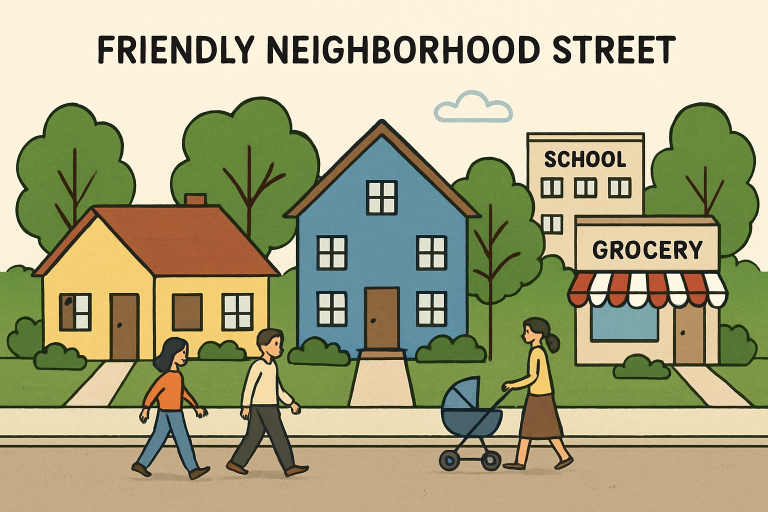
A vibrant, engaged community often indicates a healthy and thriving neighborhood. Look for evidence of community involvement, such as regular local events, farmers’ markets, block parties, or active neighborhood associations. Spotting bulletin boards advertising upcoming events, or parks filled with families and neighbors socializing, is a positive sign. Well-maintained public spaces, such as playgrounds, gardens, and walking trails, often reflect both community pride and collective investment in the neighborhood’s quality of life. You can gain insight by attending an open house or simply striking up conversations with people who live nearby; current residents are usually eager to share what they love about their neighborhood and any concerns. Community Facebook groups or apps like Nextdoor may also provide a window into local activities and the area’s general atmosphere.
Analyze Property Values and Market Trends
Understanding the local real estate market is essential for making a sound investment. Investigate current and historical property values to gauge the neighborhood’s stability, resilience, and growth potential. Look for consistent appreciation in property values over the past several years; this often signals a thriving community with strong demand. Work with real estate agents who provide access to comprehensive market reports or MLS (Multiple Listing Service) data. Pay attention not only to median home prices and days on market, but also to the direction of these trends; areas with rising sales activity, well-maintained homes, and active improvements tend to fare well over time. Conversely, neighborhoods with sudden declines in value or many vacant properties may warrant caution. Understanding long-term trends helps you make informed decisions aligned with your personal and financial goals.
Consider Future Development Plans
Future developments can have a profound impact on your living experience and property value, both positive and negative. Check with local planning or zoning departments about proposed projects such as new shopping centers, infrastructure upgrades, schools, or business complexes. Information can often be found through city council websites, regional planning offices, or public information meetings. While new developments can bring much-needed amenities and services, they may also result in increased traffic, construction noise, or changes in the area’s character. Understanding both approved and potential projects in the pipeline can prepare you for how the neighborhood might change and whether those transformations align with your lifestyle preferences.
Visit at Different Times
Neighborhoods can have very different atmospheres depending on the time of day or week. Make several visits to your prospective new area during the morning commute, in the quiet of the afternoon, on busy evenings, and throughout the weekend. This approach helps reveal traffic flows, street parking patterns, noise levels, and the types of activities residents enjoy. You might discover that an area which seems tranquil in the morning bustles with lively activity in the evenings or vice versa. Checking the neighborhood under different weather conditions and seasons is also useful for getting a complete picture of what to expect year-round.
By thoroughly evaluating these aspects, you can make an informed decision and find a neighborhood that aligns with your lifestyle and investment goals. Thoughtful research and multiple visits ensure that you choose a community that meets both your immediate needs and long-term aspirations, helping you embrace the benefits of homeownership with greater confidence and satisfaction.