
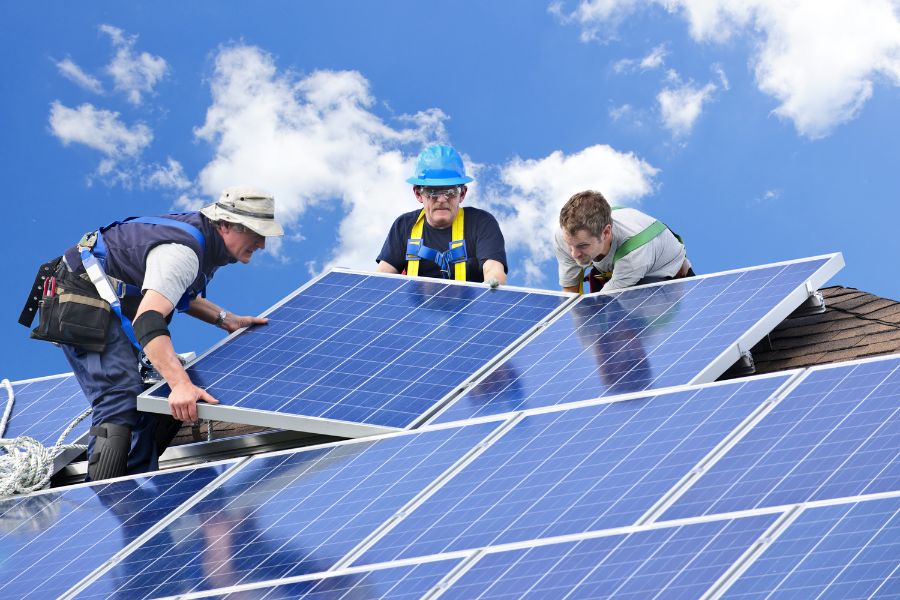
Solar panel technology has undergone substantial development over recent decades, fundamentally changing how we capture solar energy. Solar panels operate through the photovoltaic effect, a process in which photons from sunlight interact with semiconductor materials, primarily silicon, contained within solar cells. When photons strike these materials, they transfer energy to electrons, generating an electric current that can be converted into usable power.
Contemporary solar panels consist of multiple interconnected solar cells arranged in series and parallel configurations to maximize electrical output to solar battery storage or direct to house. Two primary categories of solar panels dominate the commercial market: monocrystalline and polycrystalline. Monocrystalline panels are manufactured from a single continuous crystal structure, enabling efficiency rates that frequently exceed 20%.
These panels display a uniform dark color and occupy less physical space relative to their power output, making them particularly suitable for residential applications where roof area is limited. Polycrystalline panels are produced by melting multiple silicon crystals together, resulting in a distinctive speckled blue appearance. Although they typically demonstrate lower efficiency rates than monocrystalline panels, they are more cost-effective and represent a practical choice for larger-scale installations where available space is not a limiting factor.
Choosing the Right Solar Panel System for Your Needs
Selecting the appropriate solar panel system requires careful consideration of various factors, including energy consumption, budget, and available space. A thorough assessment of your energy needs is essential; this involves analyzing your electricity bills to determine your average monthly usage. By understanding your consumption patterns, you can better estimate the size of the solar panel system required to meet your energy demands.
For instance, a household that consumes 800 kWh per month may need a system with a capacity of around 6 kW to cover its energy needs effectively. Budget constraints also play a crucial role in the decision-making process. Solar panel systems can vary significantly in price based on their type, efficiency, and installation costs.
It is advisable to obtain quotes from multiple solar providers to compare prices and services. Additionally, consider the long-term savings on electricity bills when evaluating the initial investment. Some homeowners may opt for financing options or leasing arrangements that allow them to install solar panels with little to no upfront costs while still benefiting from reduced energy expenses over time.
Optimizing Solar Panel Placement for Maximum Sunlight Exposure
The placement of solar panels is critical to maximizing their efficiency and energy output. Ideally, solar panels should be installed in locations that receive unobstructed sunlight for most of the day. South-facing roofs are often considered the best option in the Northern Hemisphere, as they capture the most sunlight throughout the year.
However, east- and west-facing roofs can also be effective, particularly if they receive ample sunlight during peak hours. In addition to orientation, the angle of the solar panels is another important factor to consider. The optimal tilt angle can vary based on geographic location and seasonal changes in sunlight.
For example, in regions closer to the equator, a flatter angle may be more effective, while areas further north may benefit from steeper angles to capture low winter sun. Utilizing solar tracking systems can further enhance energy capture by allowing panels to follow the sun’s path across the sky throughout the day.
Implementing Energy Storage Solutions for Solar Power
Energy storage solutions are becoming increasingly vital as more homeowners and businesses adopt solar power systems. These solutions allow users to store excess energy generated during sunny periods for use during cloudy days or at night when solar generation is not possible. The most common form of energy storage for solar power systems is lithium-ion batteries, which have gained popularity due to their high energy density and efficiency.
When considering solar energy storage options, it is essential to evaluate your energy usage patterns and determine how much storage capacity you may need. For instance, if your household consumes a significant amount of energy during evening hours, investing in a larger battery system may be beneficial. Additionally, some systems offer smart technology that allows users to monitor their energy consumption and storage levels in real-time, enabling more efficient management of stored energy.
Taking Advantage of Government Incentives and Rebates for Solar Panel Installation
Government incentives and rebates can significantly reduce the financial burden associated with installing solar panel systems. Many countries offer tax credits, grants, or rebates to encourage renewable energy adoption among homeowners and businesses. In the United States, for example, the federal solar tax credit allows homeowners to deduct a percentage of their solar installation costs from their federal taxes.
This incentive has been instrumental in making solar power more accessible and affordable for many households. In addition to federal incentives, many states and local governments provide additional rebates or performance-based incentives that reward users for generating renewable energy. Researching available programs in your area can help you maximize savings on your solar investment.
Furthermore, some utility companies offer net metering programs that allow homeowners with solar panels to sell excess electricity back to the grid, providing an additional financial benefit.
Incorporating Energy-Efficient Appliances and Lighting to Complement Solar Power
To fully capitalize on the benefits of solar power, it is essential to complement your system with energy-efficient appliances and lighting solutions. Energy-efficient appliances consume less electricity than their traditional counterparts, reducing overall energy demand and maximizing the effectiveness of your solar panel system. For example, replacing older refrigerators or washing machines with ENERGY STAR-rated models can lead to significant savings on electricity bills.
Lighting is another area where efficiency can make a substantial difference. Transitioning from incandescent bulbs to LED lighting can reduce energy consumption by up to 80%. LEDs not only last longer but also produce less heat, making them a safer and more sustainable choice for homes and businesses alike.
By integrating these energy-efficient solutions into your home or business alongside your solar panel system, you can create a synergistic effect that enhances overall energy savings.
Monitoring and Maintaining Solar Panels for Long-Term Efficiency
Regular monitoring and maintenance of solar panels are crucial for ensuring long-term efficiency and performance. Many modern solar systems come equipped with monitoring technology that allows users to track their energy production in real-time through mobile apps or web interfaces. This capability enables homeowners to identify any potential issues quickly, such as decreased output due to shading or dirt accumulation on the panels.
Maintenance tasks typically include cleaning the panels periodically to remove dust, debris, or bird droppings that may obstruct sunlight absorption. In most cases, rain will naturally clean the panels; however, in areas with minimal rainfall or heavy dust accumulation, manual cleaning may be necessary. Additionally, it is advisable to have a professional inspection every few years to check for any electrical issues or wear and tear on components such as inverters or mounting systems.
Selling Excess Solar Power Back to the Grid for Additional Savings
One of the most appealing aspects of solar power systems is the ability to sell excess electricity back to the grid through net metering programs or feed-in tariffs. When your solar panels generate more electricity than your home consumes, this surplus energy can be fed back into the grid, allowing you to earn credits or payments from your utility provider. This not only helps offset your electricity costs but also contributes to a more sustainable energy ecosystem by promoting renewable energy generation.
The specifics of selling excess power back to the grid can vary significantly depending on local regulations and utility policies. Some regions offer fixed payments for each kilowatt-hour generated, while others provide credits that can be applied against future electricity bills. Understanding these policies is essential for maximizing financial returns on your solar investment.
Engaging with local utility companies and staying informed about changes in regulations can help you navigate this aspect of solar power effectively.