
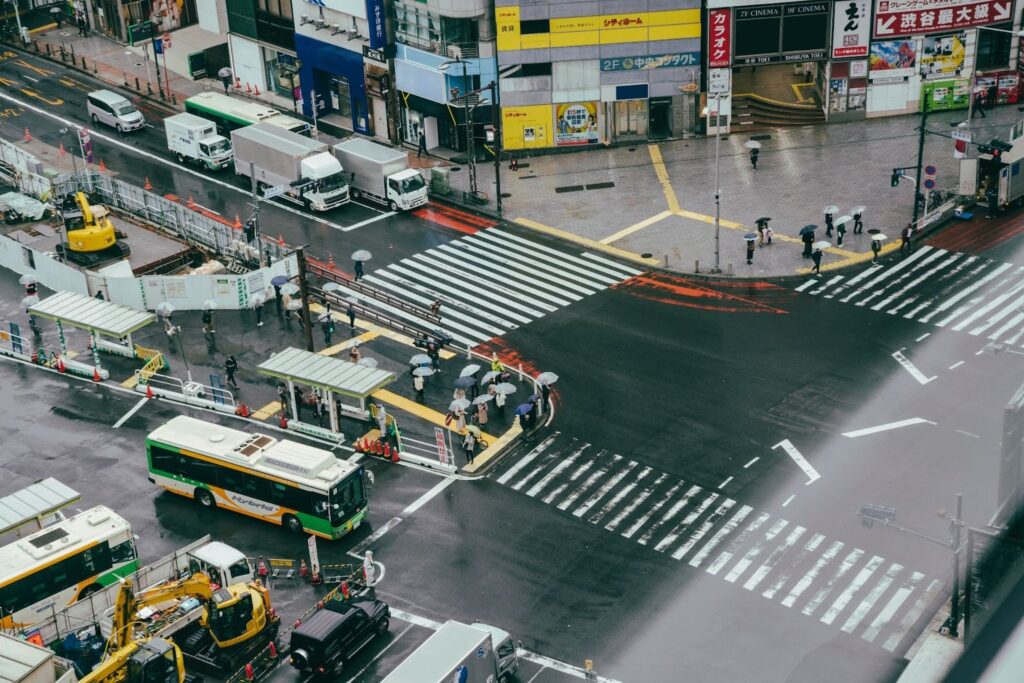
Road safety efforts are ongoing, yet pedestrian deaths at city intersections are still increasing. In nearly all the cases we studied, the contributing factor wasn’t merely driver error or pedestrian carelessness; it was infrastructure that didn’t clearly communicate in “regular, real traffic” conditions. Conventional crossing systems, developed for simpler urban landscapes, are under strain in today’s cities. Smart pedestrian signal technology provides a feasible, evidence-based solution that mitigates visibility, timing, and coordination issues that traditional systems have so long left unaddressed.
Why Traditional Pedestrian Crossings Fall Short
Traditional pedestrian signals run on fixed cycles defined by pre-commanded timing parameters, which they call “off-cycle timing commands,” that lead to very limited responsiveness to actual conditions. This inflexibility leads to deterministic malfunctions that have the direct effect of increasing risk at an intersection.
Visibility is the first casualty. Incandescent signal lamps are gradually degraded from the time of installation. They become less luminant before becoming full darkness. An older signal face may be essentially unreadable in bright sunlight or inclement weather and yet never set off any maintenance alarms. This margin of error is especially hazardous for visually impaired pedestrians.
Ambiguity in timing makes the problem even worse. A nonflashing walk symbol tells you nothing about how much walking time you have left. Pedestrians who run out of time to cross in the middle of a phase are more prone, on average, to making rushed crossings and to being hit by cars.
Accumulated, these faults concentrate the potential for accidents right at those points where the pedestrian continually crosses the path of the vehicle.
Key Features of Modern Pedestrian Signal Systems
Contemporary intelligent signal systems substitute each of these points of failure with a focused engineering fix.
The LED illumination source does not degrade over time like the incandescent source. LED arrays generate high-saturation colors that remain easily distinguishable in direct sunlight – increasing effective detection distance and providing earlier and more reliable phase information for both pedestrians and drivers.
Countdown timers eliminate uncertainty about timing directly. When pedestrians can see the exact number of seconds remaining in a walk phase, they make better crossing decisions. Fewer premature starts, fewer unfinished crossings, fewer hesitations in the middle of the street, all of which are known to cause conflicts and accidents in traditional intersections.
A good pedestrian traffic Light integrates these optical and informational enhancements in a durable, weatherproof enclosure suitable for long-term installation outdoors. UV-stabilized lenses, sealed enclosures, and stainless steel enclosures are superior in maintaining functionality in freezing weather or hot summers without routine maintenance.
How Smart Signals Improve Safety and Coordination
Smarter signals for pedestrians are not a matter of one at a time — their benefits multiply across networks of intersections.
Sensors for the detection of pedestrians integrated in the housings of modern signals transmit presence information in real-time to controllers, allowing a phase change to be made in real-time according to actual demand. This also prevents pedestrians from waiting too long when there is little traffic, and allows them to cross longer when there is a lot.
Introducing a connected pedestrian traffic light in a coordinated signal system can significantly enhance the compliance rate and the vehicle delay, as well as the conflict number. Studies from several urban sites demonstrate that improved intersections experience significantly fewer pedestrian-vehicle collisions in the first year after installation.
Conclusion
Intelligent pedestrian signal systems bridge the divide between old infrastructure and modern safety standards. By increasing visibility and through more precise timing and adaptive detection, these systems treat the root causes of intersection risk, not its byproducts. With urban populations rising and intersections becoming more complex, enhancing pedestrian signal infrastructure is one of the most straightforward, evidence-backed investments that cities can make to improve public safety.
Ai Report