
Every fitness enthusiast who trains in a pool knows the frustration: you push off the wall, build momentum, and just as you hit your stride, the lane ends. Traditional pools confine swimmers to repetitive flip turns, breaking rhythm and limiting the continuous effort needed for serious endurance development. The resistance stays static, the space feels restrictive, and longer training sessions become an exercise in monotony rather than athletic progression.
High-performance pool jets change this equation entirely. By generating a powerful, adjustable current directly in your pool, these systems create an endless swimming experience where runtime is limited only by your stamina—not your surroundings. Whether you’re training for a triathlon, rehabilitating an injury, or simply pushing your cardiovascular limits, jet-driven currents deliver consistent water resistance that adapts to your goals. At the heart of this technology lies the stainless steel motor, engineered for continuous operation without the overheating and wear that plague conventional systems. The result is enhanced pool performance that transforms any body of water into a professional-grade training facility. Let’s explore how these systems work and what they mean for your fitness journey.
Understanding Pool Jets: The Engine Behind Superior Pool Performance
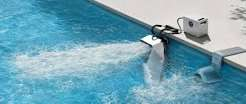
Pool jets are propulsion systems designed to generate a continuous, directed current within a contained body of water. Unlike the passive environment of a standard pool, where water remains still until a swimmer displaces it, jet systems actively push water toward you, creating resistance that mimics river currents or open-water conditions. Think of them as a treadmill for swimmers—the water moves, you stay in place, and the workout never stops.
For fitness enthusiasts pursuing serious aquatic training, this distinction matters enormously. Traditional pool swimming forces you to generate all your own momentum, then interrupts it every 25 or 50 meters with a wall. Jets eliminate that constraint by producing a steady flow you swim against continuously. The resistance becomes your training partner, one that never tires and never takes a break. This is where the concept of runtime becomes critical: your training session length depends entirely on how long the system can maintain its current output without degradation or shutdown.
What separates adequate pool performance from exceptional pool performance is the quality of the jet system itself. Cheaper units produce turbulent, uneven flows that buffet swimmers unpredictably, making it impossible to maintain proper technique. High-performance systems deliver laminar, smooth currents that feel like swimming in a natural body of water—consistent from stroke to stroke, adjustable in intensity, and wide enough to accommodate full bilateral movement. The jet’s motor, impeller design, and nozzle configuration all contribute to this experience. When these components work in harmony, adjustable resistance becomes truly meaningful: you can dial in anything from a gentle recovery pace to race-intensity effort, all without leaving your position in the pool. Runtime, then, isn’t just about the motor surviving—it’s about maintaining that precise flow quality for as long as your body can keep going.
The Science of Water Resistance and Training Efficiency
Water is approximately 800 times denser than air, which means even modest current speeds create substantial resistance against a swimmer’s body. Pool jets exploit this density by generating controlled flow rates that force muscles to work harder during every phase of the stroke cycle—the catch, pull, and recovery all encounter opposition that wouldn’t exist in still water. This translates directly to greater calorie expenditure; studies on aquatic resistance training show that swimming against a current can increase energy output by 30 to 50 percent compared to equivalent efforts in static water.
Beyond raw calorie burn, consistent jet-driven current engages stabilizer muscles throughout the core, hips, and shoulders as swimmers maintain body position against the flow. Traditional lap swimming allows brief rest during glides and turns, but jet training demands constant muscular engagement. For endurance building specifically, this uninterrupted effort trains the aerobic system more effectively because there are no micro-recoveries at walls. The heart rate stays elevated, lactate clearance improves under sustained load, and the neuromuscular patterns that govern efficient swimming become ingrained through continuous repetition rather than fragmented intervals.
Why Stainless Steel Motors Are Key to Unlimited Runtime
The motor is the heart of any pool jet system, and its construction material determines whether your training sessions end when you decide—or when the equipment gives out. Stainless steel motors have emerged as the gold standard for high-performance pool jets because they address the three primary failure points that plague lesser systems: corrosion, heat buildup, and mechanical wear.
Pool environments are inherently hostile to machinery. Chlorinated water, humidity, and constant exposure to moisture create conditions that rapidly degrade conventional motor housings and internal components. Stainless steel resists this chemical assault through its chromium-oxide surface layer, which self-repairs when scratched and prevents the rust propagation that eventually seizes bearings and destroys windings in standard motors. This corrosion resistance isn’t merely about longevity in abstract terms—it directly preserves the tight tolerances that keep a motor running smoothly and quietly session after session.
Heat management represents the second critical advantage. During extended operation, motors generate significant thermal energy. Traditional motors in pool jet systems often incorporate thermal cutoff switches that shut the unit down after 30 to 45 minutes of continuous use, forcing swimmers into unwanted breaks. Stainless steel’s superior thermal conductivity dissipates heat more efficiently across the motor housing, while its structural stability at elevated temperatures means components maintain their geometry rather than warping under thermal stress. The practical outcome is a motor that sustains full output for hours, not minutes—true unlimited runtime that matches even the most ambitious training plans.
Energy efficiency compounds these benefits. A motor that runs cooler wastes less energy as heat, directing more electrical input toward actual water propulsion. Over time, this efficiency translates to lower operating costs and reduced strain on electrical systems, making extended daily use financially sustainable. For fitness enthusiasts who train twice daily or run recovery sessions back-to-back with intensity work, this reliability isn’t a luxury—it’s the foundation of consistent pool performance that supports progressive overload and measurable improvement.
Comparing Motor Types: Stainless Steel vs. Traditional Options
Standard pool jet motors typically use aluminum or composite housings with copper windings that lack protective coatings designed for aquatic environments. These units carry lower upfront costs but demand seal replacements every 12 to 18 months, suffer efficiency losses as internal corrosion increases friction, and often require complete motor replacement within three to five years of regular use. For casual pool owners running jets occasionally, this trade-off may seem acceptable. For fitness enthusiasts operating systems daily at high intensity, the math shifts dramatically. Stainless steel motors commonly deliver service lives exceeding ten years under demanding conditions, with maintenance limited to periodic inspection rather than component replacement. The absence of forced downtime—both from overheating shutoffs and repair periods—means your training schedule remains uninterrupted. When you calculate total cost of ownership including replacements, energy waste from degraded efficiency, and the value of consistent training availability, stainless steel systems prove more economical for anyone serious about their aquatic fitness commitment.
Transforming Pool Training with High-Performance Jets
For fitness enthusiasts who treat swimming as a primary training modality rather than casual recreation, high-performance jets fundamentally reshape what’s possible in a confined aquatic space. The transformation begins with variable speed settings that unlock structured interval training without the logistical headaches of pace clocks and wall pushoffs. You program the current intensity, and the jet delivers precise resistance increments—perhaps 1.2 meters per second for your warm-up, ramping to 1.8 for threshold work, then dropping back for active recovery. This precision eliminates guesswork and creates repeatable training stimuli that drive measurable adaptation over weeks and months.
Stroke technique benefits enormously from jet-assisted training because the continuous current provides immediate tactile feedback. When your hand entry angle is off or your catch slips, you feel the current push you backward instantly. In still water, these inefficiencies hide behind momentum from your last pushoff. Against a jet, every technical flaw costs you position, making self-correction intuitive and constant. Coaches working with competitive swimmers increasingly use jet systems for this reason—the current doesn’t lie, and athletes develop proprioceptive awareness that transfers directly to race conditions.
Year-round training consistency represents another significant advantage. Indoor pools equipped with jet systems eliminate weather dependencies entirely, while outdoor installations extend usable seasons by making shorter pools viable for serious training. A four-meter space with a powerful jet system delivers workouts equivalent to swimming thousands of meters in a full-length pool, compressing facility requirements without compromising training quality. This accessibility means morning sessions before work, evening recovery swims, and weekend endurance blocks all happen on your schedule rather than around pool availability.
The unlimited runtime enabled by stainless steel motors makes progressive overload genuinely achievable in pool training. You can extend session duration by five minutes each week, building toward two-hour continuous efforts that develop the aerobic base necessary for open-water events and triathlon performance. Without runtime constraints, periodization follows your body’s readiness rather than equipment limitations—a distinction that separates recreational swimmers from athletes pursuing tangible performance goals.
Case Studies: Fitness Enthusiasts Achieving Goals with Jet-Assisted Workouts
Consider a masters-level triathlete preparing for an Ironman event who lacks access to a 50-meter pool. By installing a high-performance jet system in a backyard pool, she structures 90-minute continuous swims at race-pace intensity three times weekly—sessions impossible without unlimited runtime capability. Over sixteen weeks, her open-water swim split drops by four minutes as her stroke economy improves from uninterrupted practice against consistent resistance.
Another scenario involves a former collegiate swimmer recovering from shoulder surgery. Traditional lap swimming aggravates the joint during flip turns and pushoffs, but jet-assisted stationary swimming eliminates these impact points entirely. Starting at minimal current speeds, he progressively increases resistance over months, rebuilding strength and endurance without reinjury. The ability to run the system for extended low-intensity sessions—sometimes exceeding two hours during recovery phases—accelerates his return to competitive form.
A recreational fitness enthusiast who finds lap swimming tedious discovers that jet training transforms her relationship with the pool. Variable speed settings let her create interval workouts that mirror her cycling training structure: hard efforts followed by active recovery, all within a single position. Sessions that previously felt monotonous at thirty minutes now engage her for over an hour, and her cardiovascular fitness markers improve significantly within two months of consistent jet-assisted training.
Practical Steps to Implement and Optimize Your Pool Jets
Transitioning from a standard pool to a jet-enhanced training environment requires thoughtful planning, but the process is more straightforward than most fitness enthusiasts expect. Start by assessing your current pool dimensions and configuration. Measure the available swimming lane length, note the depth at your intended installation point, and identify where electrical supply lines run relative to the pool shell. Jets perform best when mounted at one end of the longest available axis, directing current along the full length of your swimming space. Even pools as short as three to four meters can become effective training environments when the jet placement maximizes usable flow distance.
Selecting the right system means prioritizing motor construction and flow characteristics over marketing claims. Look for units built around stainless steel motors with sealed bearing assemblies designed for continuous duty cycles. Evaluate the jet’s flow volume—measured in liters per minute—and its nozzle configuration. Wider nozzle arrays produce broader current fields that accommodate full stroke width without forcing you into an unnaturally narrow swimming corridor. Variable speed control is non-negotiable for serious training; you need granular adjustment across the full intensity range, not just two or three preset levels. Smart home platforms like iGarden can integrate with compatible jet systems, allowing you to program workout profiles, schedule sessions, and monitor runtime data directly from your phone or voice assistant.
Installation considerations include structural reinforcement at the mounting point, since high-output jets exert significant force against the pool wall during operation. Professional installation ensures proper waterproofing of electrical connections and correct alignment of the jet housing relative to the water surface. Once mounted, calibrate your system by swimming at known effort levels and recording the speed settings that correspond to your recovery, aerobic, threshold, and sprint intensities. Document these benchmarks so you can program structured workouts with precision. Integrate jet sessions gradually into your existing training plan—start with two or three weekly sessions of moderate duration, then extend both frequency and length as your body adapts to the continuous resistance demands that unlimited runtime makes possible.
Maintenance Tips for Sustained Unlimited Runtime
Keeping your stainless steel motor performing at peak capacity requires consistent but minimal attention. Inspect the jet intake grate weekly, removing any debris—hair, leaves, or small objects—that could restrict flow or stress the impeller. Monthly, check the nozzle assembly for calcium buildup, particularly in hard-water regions, and dissolve deposits with a diluted vinegar solution rather than abrasive tools that could damage flow surfaces. Every three months, examine the motor housing seals visually for any signs of moisture intrusion or discoloration that might indicate early wear. Listen for changes in operating sound during regular use; a well-maintained stainless steel motor runs quietly, and any new vibration or grinding warrants immediate professional inspection before minor issues become costly failures. Keep water chemistry balanced within manufacturer specifications, as extreme pH levels can challenge even corrosion-resistant materials over extended periods. These simple protocols protect your investment and ensure the system delivers uninterrupted runtime whenever your training demands it.
Elevate Your Aquatic Training with Jet-Powered Unlimited Runtime
High-performance pool jets represent a fundamental shift in how fitness enthusiasts approach aquatic training. By generating consistent, adjustable currents that eliminate the stop-start nature of traditional lap swimming, these systems transform any pool into a limitless training environment where your endurance—not your equipment—determines session length. The stainless steel motor sits at the core of this capability, delivering the corrosion resistance, thermal management, and mechanical durability required for truly unlimited runtime under demanding daily use.
For serious swimmers, triathletes, and fitness-focused individuals, the combination of precise resistance control and uninterrupted operation creates training conditions that drive measurable improvement in cardiovascular capacity, stroke efficiency, and overall pool performance. The investment pays dividends not just in equipment longevity but in the consistency of training access that builds athletic progress over months and years. If your current pool setup limits your ambitions—whether through space constraints, interrupted sessions, or unreliable equipment—upgrading to a high-performance jet system with a stainless steel motor is the most impactful change you can make. Assess your space, choose a system built for continuous duty, and start training without boundaries. Your next breakthrough is waiting in the current.