
The popular image of a stamping manufacturer is a shop full of presses punching out identical parts. That image is accurate but incomplete. A capable manufacturer does much more than run a press.
Design support is one of the first services a good manufacturer provides. Their engineers review part drawings and assess whether the design is suitable for stamping. They identify features that might cause problems, suggest changes that reduce cost or improve quality, and recommend the right material for the application.
Tooling design and construction is another core capability. The die is the heart of the stamping process. Its quality determines the quality of the finished part. A manufacturer with in-house tooling capability can control lead times and quality in ways that a manufacturer who outsources tooling cannot.
Production is the most visible activity. The manufacturer runs the presses, feeds the material, monitors the process, and produces the parts. The efficiency of this operation determines the cost of the parts.
Secondary operations are often required. These may include deburring, tumbling, heat treating, plating, painting, or assembly. A manufacturer who can perform these operations in-house simplifies the supply chain and reduces lead times.
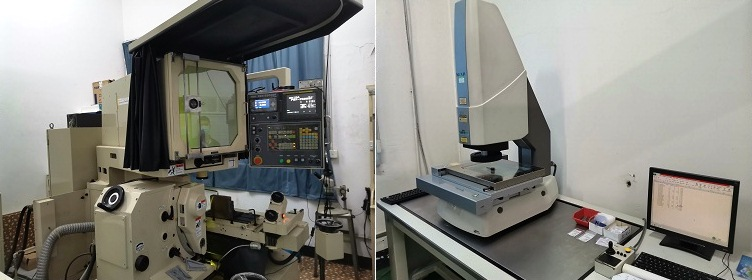
Quality assurance is essential. The manufacturer must have the equipment and procedures to verify that parts meet specifications consistently. This includes dimensional inspection, material verification, and functional testing.
The Different Types of Metal Stamping Manufacturers
The stamping industry has several distinct tiers, each with its own capabilities and market focus.
High-volume manufacturers specialize in producing large quantities of parts at low unit cost. They use progressive dies, automated presses, and continuous feeding systems. They serve industries such as automotive and appliances where volumes are measured in millions of units.
Low-volume and prototype manufacturers focus on small batches, rapid turnaround, and design flexibility. They may use simple dies, laser cutting, or other methods to produce parts without the expense of hard tooling. They serve startups, design firms, and companies that need parts quickly for testing or limited production.
Precision manufacturers specialize in tight tolerances and complex geometries. They serve industries such as medical devices, aerospace, and electronics where performance is critical. They invest in high-precision presses, sophisticated inspection equipment, and skilled technicians.
Deep draw manufacturers specialize in forming three-dimensional shapes from flat metal. They produce cups, shells, enclosures, and other hollow parts. They serve industries such as automotive, appliances, and packaging.
Fine blanking manufacturers specialize in producing parts with smooth edges and tight tolerances. They serve industries that require high accuracy, such as automotive transmissions and medical devices.
What to Consider When Selecting a Manufacturer
The selection process begins with the part. What is the material? What is the thickness? What are the tolerances? What is the production volume? What are the secondary operations required? The answers to these questions define the type of manufacturer that can produce the part.
The manufacturer’s capabilities are the next consideration. Do they have the right presses for the part size and volume? Do they have the tooling capability to build the die? Do they have the inspection equipment to verify the parts? Do they have the secondary operations in-house or through qualified partners?
The manufacturer’s experience matters. Have they produced similar parts for similar industries? Can they provide references? What do their customers say about their performance?
The manufacturer’s quality systems are critical. Do they have ISO 9001 certification? Do they have industry-specific certifications such as IATF 16949 for automotive or AS9100 for aerospace? Do they have a documented quality management system?
The manufacturer’s capacity and lead times matter. Can they meet the required production volumes? Can they deliver on the required schedule? Do they have the financial stability to support a long-term relationship?
The manufacturer’s location matters for logistics. A domestic manufacturer may offer shorter lead times and easier communication. An overseas manufacturer may offer lower costs but longer lead times and potential communication challenges.
The RFQ Process
The request for quote is the formal process by which a buyer asks a manufacturer to price a part. The RFQ should include the part drawing, the material specification, the tolerance requirements, the production volume, and the delivery schedule.
A good manufacturer will respond to the RFQ with a detailed quote that includes the piece price, the tooling cost, the lead time, and any assumptions or exceptions. They may also provide suggestions for reducing cost or improving manufacturability.
The buyer should compare quotes from multiple manufacturers before making a decision. The lowest price is not always the best value. The buyer should consider the total cost of ownership, including quality, lead time, communication, and risk.
The Bottom Line
A metal stamping parts manufacturer is more than a supplier. They are a partner in the production process. The choice of a manufacturer affects product quality, production costs, lead times, and long-term supply reliability. For engineers and buyers, understanding what these manufacturers do and how to evaluate them is essential to making a sound decision. The right manufacturer delivers not just parts but reliability, consistency, and technical support that keeps production running.