
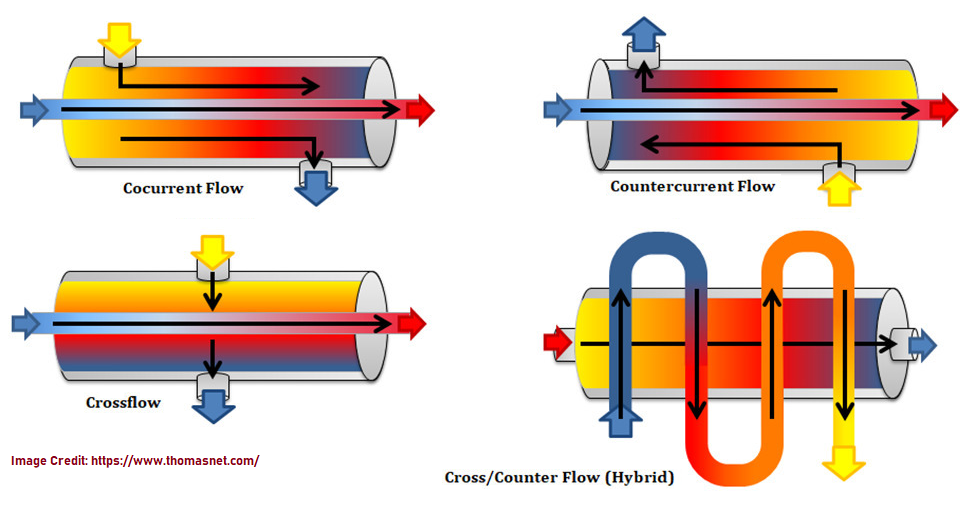
Heat exchangers play a critical role in countless industrial processes, from food and beverage production to chemical manufacturing, pharmaceuticals, energy generation, and HVAC applications. While heat exchangers all serve the same basic purpose—transferring heat between fluids—the specific design selected can have a significant impact on efficiency, operating costs, maintenance requirements, and overall system performance.
Unfortunately, many organizations focus primarily on initial equipment cost when evaluating options. In reality, selecting the wrong heat exchanger can lead to higher energy consumption, increased downtime, frequent maintenance, and reduced product quality. Understanding the key factors involved in heat exchanger selection can help businesses avoid costly mistakes and maximize long-term value.
Understanding Common Heat Exchanger Types
Several heat exchanger technologies are commonly used across industries. Each offers unique advantages depending on the application.
Plate Heat Exchangers (PHEs) use a series of thin metal plates to create channels for fluid flow. Their design promotes excellent heat transfer efficiency while maintaining a compact footprint. Plate heat exchangers are frequently used in hygienic processing industries because they offer efficient cleaning and maintenance capabilities.
Shell and Tube Heat Exchangers consist of a bundle of tubes enclosed within a cylindrical shell. These units are often selected for applications involving high pressures, high temperatures, or challenging operating environments.
Tubular Heat Exchangers are commonly used when products contain particulates, fibers, or highly viscous materials that could create fouling concerns in other exchanger designs.
Scraped Surface Heat Exchangers are designed for extremely viscous products and applications where fouling must be continuously removed from heat transfer surfaces.
Understanding these technologies is the first step toward making an informed decision.
Factors That Influence Heat Exchanger Performance
No single heat exchanger design is ideal for every application. Several variables should be evaluated during the selection process.
Product Characteristics
Fluid properties significantly affect performance. Viscosity, particulate content, fouling tendencies, and thermal sensitivity all influence which technology will provide the best results.
For example, a low-viscosity liquid may perform exceptionally well in a plate heat exchanger, while a product containing large suspended solids may require a tubular design.
Temperature Requirements
The required heating or cooling duty is another major consideration. Engineers must determine the desired inlet and outlet temperatures, temperature differentials, and thermal load to ensure the selected exchanger can achieve process goals efficiently.
Cleaning and Maintenance
In many industries, cleanability is just as important as thermal performance. Food, beverage, dairy, and pharmaceutical manufacturers often prioritize equipment that supports effective Cleaning-in-Place (CIP) procedures.
Some heat exchanger designs allow for easier inspection, cleaning, and gasket replacement, reducing maintenance costs over time.
Space Constraints
Facility layout can also impact equipment selection. Compact heat exchanger technologies may provide substantial advantages when floor space is limited or when equipment must be integrated into existing production lines.
Operating Costs
While initial purchase price matters, total cost of ownership often provides a more accurate measure of value. Energy consumption, cleaning requirements, maintenance frequency, and expected service life all contribute to long-term operating costs.
Avoiding Common Selection Mistakes
One of the most common mistakes organizations make is choosing equipment based solely on thermal calculations. While heat transfer performance is critical, factors such as cleanability, maintenance access, pressure drop, and future production requirements must also be considered.
Another frequent issue involves underestimating product variability. A heat exchanger that performs well under current operating conditions may struggle if product formulations, production volumes, or process requirements change over time.
Working with experienced engineers can help identify these challenges before equipment is purchased and installed.
Taking a Comprehensive Approach
Successful heat exchanger selection requires balancing multiple factors rather than focusing on a single performance metric. Product characteristics, cleaning requirements, thermal efficiency, maintenance needs, available space, and long-term operating costs should all be part of the evaluation process.
For a detailed guide to evaluating technologies and identifying the best option for your application, review this comprehensive resource on heat exchanger selection.
By taking a strategic approach and considering the full lifecycle of the equipment, organizations can improve efficiency, reduce operating costs, and achieve more reliable process performance for years to come.