
A marketing director recently ran a localization experiment for her team. She had one promo video shot with a North American presenter. Instead of reshooting it five more times for different markets, she swapped in local faces for Japan, Brazil, Germany, and Spain, all from a browser tab. Total time: two hours. Nobody on her team had a film background.
That story is more common than people think. AI video face swap has moved out of the “deepfake demo” corner and into real production workflows. But it carries genuine questions about quality, legality, and ethics that are worth walking through honestly.
What the technology actually does
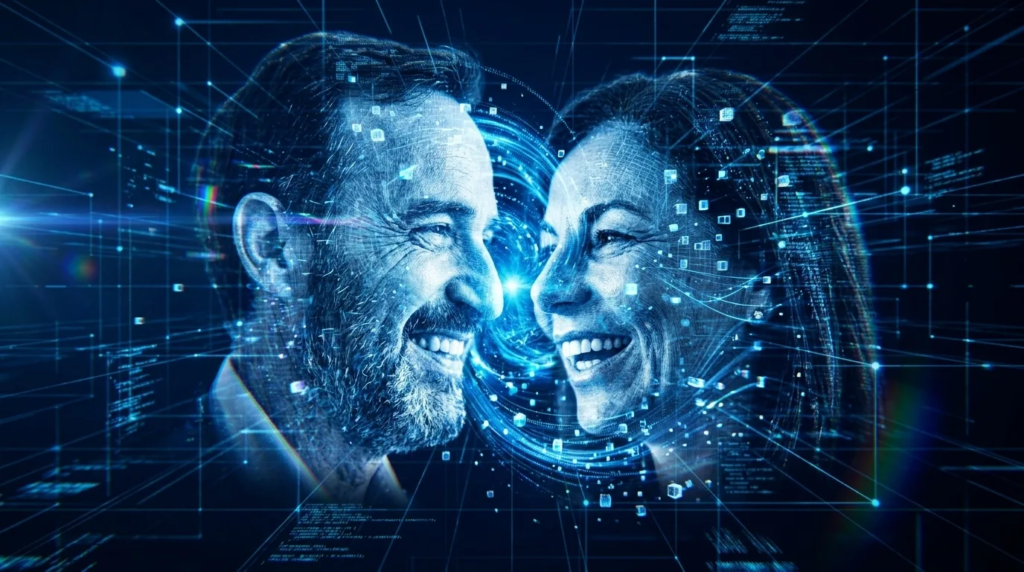
AI face swap for video replaces one person’s face in footage with another. The underlying system analyzes each frame, tracking facial landmarks, head angle, lighting direction, and skin tone, then maps the replacement face frame by frame. Better tools handle natural head movements and expressions without the replacement face looking pasted on.
Processing speed has improved sharply. Most platforms now return results in 60 to 120 seconds for standard clips. iMideo, for example, supports multiple AI models with a single credit pool and handles video face swaps alongside text-to-video, image animation, and other video tools in one workspace. That makes it practical for creators who cycle through several types of video work without juggling multiple subscriptions.
Where creators are actually using it
Content localization is the biggest legitimate use case. If you’ve shot a training video or product demo with one presenter and need it to work in three countries, reshooting is expensive. Swapping the presenter’s face while keeping the original audio and background cuts both cost and time. Enterprise teams running global campaigns use this regularly.
Marketing experiments are a close second. Instead of committing to one brand ambassador for an ad, some teams swap in different faces to A/B test which presenter resonates better before spending on full production.
Social content and memes drive most of the consumer usage. Putting your face in a movie scene, matching a trending TikTok clip, or creating personalized birthday videos are low-stakes uses that most people encounter first.
Film and indie production also benefits, specifically for stunt double integration and post-shoot corrections when an actor’s face needs replacing in a specific shot.
Where it still struggles
Face swap quality drops under several conditions. Low-resolution source images leave the replacement face looking soft or blurry against sharp background footage. Extreme head angles, roughly past 45 degrees up or down, often produce visible distortion at the face edges. Rapid motion in the target video can introduce flickering between frames, especially on cheaper tools. Lighting mismatches between the source photo and the target video, say a dim indoor headshot against bright outdoor footage, are obvious even in finished exports.
Complex shots require more work than single-angle, moderate-motion clips. Knowing your footage before you start saves more time than picking the most expensive tool.
The consent question you can’t skip
In 2026, non-consensual face swap content is illegal in multiple US states and a growing number of countries. Using someone’s likeness without permission isn’t a gray area anymore. Even if the technology works, that doesn’t make any particular use appropriate.
The legitimate uses are straightforward: localization, marketing tests, personal projects where you’re using your own face or have explicit permission. The problems arise when people swap public figures or private individuals without consent. That use case has clear legal consequences now that legislation has caught up.
Most reputable platforms build consent requirements into their terms of service. If a tool doesn’t, pay attention to that.
How to get good results
Start with a clean, well-lit face photo. A high-resolution headshot in similar lighting to your target video will produce a noticeably better result than a cropped screenshot from a social profile.
Match the footage complexity to your expectations. For a first experiment, use a clip with moderate head movement and stable lighting. Once you understand how the tool handles that, you can move to harder cases.
Try multiple models on the same clip. Different AI models handle specific situations differently. Some are better at preserving expression; others handle darker skin tones more accurately. If your platform supports model switching, run two comparisons before committing to a final export.
If you want to test how AI video face swap fits into an existing workflow, starting with a simple template clip removes most of the variables. Upload a clear face photo, pick a moderate-motion video, and check the output before moving to more complex footage.
The practical summary
Face swap technology in 2026 is genuinely useful for a defined set of tasks: localization, creative experimentation, personal projects, and specific production corrections. Quality depends heavily on what you put in, and the consent requirements are real. For the cases where it fits, the time savings are real. For the cases where it doesn’t, no amount of processing speed makes up for poor source material or an inappropriate use case.
The creators getting the most out of it treat it as one specific tool in a larger workflow, not a shortcut for everything.