
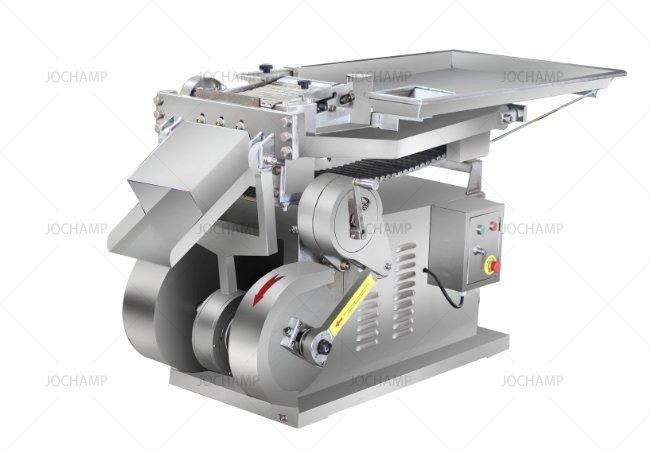
Buying a Tobacco Cutting Machine is a five-to-ten-year decision. The right machine hums along for a decade with routine maintenance; the wrong one becomes a source of daily frustration, inconsistent product, and expensive retrofits. This guide covers the specifications that actually determine whether a machine earns its keep — and the sales-pitch numbers you can safely ignore.
Capacity: Buy for Tomorrow, Not Today
Manufacturers quote capacity in kilograms per hour, and those numbers are usually measured under ideal conditions with ideal leaf. Derate them by 20–30% for real-world planning. Then think ahead: a Tobacco Cutting Machine that exactly meets today’s demand will be undersized within two years if your business grows at all. The cost jump from a 200 kg/h machine to a 400 kg/h machine is far smaller than buying a second machine later — and one larger machine is simpler to staff and maintain than two small ones. That said, do not overshoot absurdly either; a giant machine running at 15% utilization wastes energy and floor space.
Cut Size Range and Adjustability
Ask for the machine’s achievable cut-width range in millimeters, not adjectives like “fine”. A versatile Tobacco Cutting Machine covers roughly 0.5 mm to 3 mm, adjustable without a full teardown. Critically, ask how long a changeover takes and whether it needs special tooling — producers running multiple blends will change cut sizes weekly, and a two-hour changeover versus a twenty-minute one compounds fast. Request sample cuts at both extremes of the range using your own leaf; machines behave differently with different moisture levels and leaf varieties.
Fines percentage is the hidden spec. Ask the supplier what proportion of output falls below your target size at rated capacity — a good Tobacco Cutting Machine keeps this in low single digits, and the number directly affects your yield economics.
Build Quality: What to Inspect
You can judge a surprising amount with your eyes and hands. Frame and housing should be food-grade stainless steel — tobacco is a consumable product, and painted mild steel has no place in the product zone. Blades should be tool steel or carbide-tipped, clearly replaceable without dismantling half the machine. Bearings and drives should be branded components (ask for names), not anonymous parts. Guards and interlocks must be solid and sensibly placed; flimsy safety hardware predicts flimsy everything else. If you can visit the factory, watch a machine run for an hour: listen for vibration, watch for leaks, and note how the operators interact with it.
Automation and Controls
Modern machines range from push-button simple to fully PLC-controlled with recipe memory. For multi-product operations, recipe storage — saved settings for each blend’s cut width, feed rate, and moisture targets — is genuinely valuable, eliminating setup errors between runs. HMI touchscreens should be intuitive enough that a new operator learns them in a day. Do not pay for automation you will not use, but do not dismiss it either: a Tobacco Cutting Machine with good controls produces more consistent output with less-skilled labor, which matters as teams grow.
After-Sales: The Real Price Tag
The purchase price is maybe half the lifetime cost. Before signing, get straight answers on: blade and wear-part prices and availability, typical annual spares spend, whether technicians can reach you within days (not weeks), and what the warranty actually covers. A slightly more expensive Tobacco Cutting Machine from a supplier with local service and stocked spares is almost always cheaper over five years than a bargain machine with no support. Ask for two reference customers running the same model and call them — ten minutes on the phone beats ten pages of brochure.
Buy methodically: define your cut and capacity needs, inspect build quality in person, test with your leaf, and price the lifetime — not just the machine. The buyers who do this sleep well for a decade.
Installation and Commissioning
A Tobacco Cutting Machine does not just get plugged in. Plan for proper installation: a level, vibration-isolated foundation; adequate electrical supply with clean grounding; dust extraction ducted and balanced before first run; and enough clearance around the machine for blade changes and maintenance access. Rushing installation to ‘start producing tomorrow’ is how machines end up misaligned from day one.
Insist on supervised commissioning: the supplier’s technician should run your leaf, dial in the cut, and train your operators before signing off. Get the commissioning report in writing — settings, test results, and the punch list of anything still pending. A Tobacco Cutting Machine commissioned properly starts its life in spec; one rushed into service starts its life as a problem you will chase for months.
Do not overlook installation logistics in your budget. A Tobacco Cutting Machine needs proper foundations, extraction ducting, and electrical work — typically adding 10–15% to the project cost. Get installation requirements in writing before ordering so there are no surprises, and schedule commissioning with the supplier’s technician, not just a delivery driver. Proper setup day one prevents months of troubleshooting.