
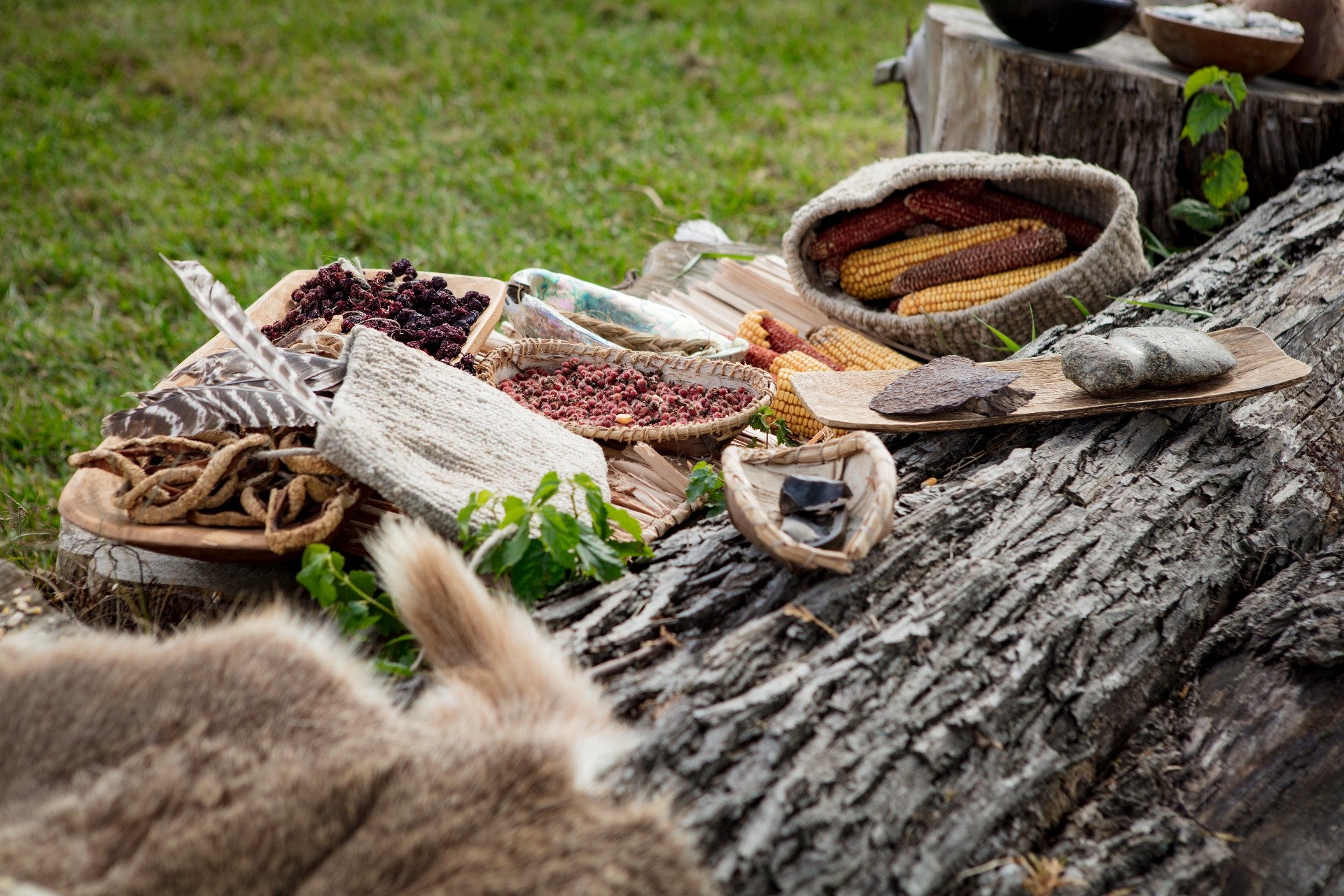
The modern prepper spends considerable time and money solving a problem that indigenous peoples across North America solved thousands of years ago. How do you feed yourself and your community through seasons of scarcity, through harsh winters, through drought, through the complete absence of any supply chain beyond what you can grow, gather, hunt, and preserve with your own hands?
The answer was not a single technique or a single crop. It was a complete system. A way of relating to the land that was simultaneously practical, efficient, and deeply knowledge-intensive. The tribes that thrived in environments ranging from the arid Southwest to the frozen North to the dense forests of the Southeast did so not because they were lucky with geography, but because they accumulated and transmitted generations of knowledge about exactly how to extract reliable nutrition from their specific environment across every season and in every condition.
For anyone serious about genuine food self-sufficiency, this body of knowledge is worth studying carefully. Not as a curiosity or as a cultural artifact, but as a practical curriculum in what long-term food security actually looks like when it has been tested against reality for centuries.
The Three Sisters: The Most Productive Food System Ever Developed in North America
No discussion of indigenous food production can begin anywhere other than the Three Sisters: corn, beans, and squash grown together in a polyculture system that predates European contact by at least a thousand years and fed populations across most of the continent.
The system works on multiple levels simultaneously. Corn grows tall and provides a structure for beans to climb, eliminating the need for separate poles or trellises. Beans fix atmospheric nitrogen into the soil, fertilizing the corn and squash without any external input. Squash spreads along the ground, shading out weeds and retaining soil moisture with its broad leaves, reducing water requirements for all three crops. The roots of the three plants occupy different soil depths, meaning they do not compete significantly for the same resources.
The nutritional design is equally elegant. Corn provides carbohydrate and energy. Beans provide protein and the amino acids that corn lacks. Squash provides vitamins, minerals, and caloric density from its flesh and seeds. Together, the three crops provide a nutritional profile that sustained entire civilizations. Populations living primarily on Three Sisters agriculture were not malnourished. They were well-fed on a system that required no synthetic fertilizer, no pesticide, and no external inputs beyond seed saved from the previous season.
The productivity of this system per acre of land, measured in complete nutrition rather than just caloric output, rivals or exceeds many modern monoculture systems when the full input costs are accounted for. It is one of the most sophisticated agricultural innovations in human history, and it was developed entirely through empirical observation and multi-generational refinement without any of the institutional structures we associate with agricultural science.
Food Preservation Without Refrigeration or Canning
Growing foodis only half the challenge of year-round food security. The other half is keeping it. Indigenous peoples developed preservation methods that kept food stable for months or years without electricity, glass jars, or vacuum sealing, and many of these methods are more practical for homesteaders and preppers than the modern alternatives they have largely replaced.
Drying
Drying is the oldest and most universal preservation method across all North American cultures. Meat was sliced thin and dried in the sun or over low fires to make jerky. Fish was split and dried on wooden racks. Corn was dried on the cob and then shelled for long-term storage. Berries were dried whole or mashed into sheets. Squash was sliced into rings and dried. Herbs, roots, and medicinal plants were bundled and hung.
Properly dried food at low enough moisture content is shelf-stable for a year or more without any additional treatment. The technique requires no equipment beyond a knife and a drying surface, and the product is lightweight, compact, and nutritionally dense. It is also reversible, rehydrating with water to produce a product that closely resembles the original.
Rendering and Fat Preservation
Fat was among the most valuable nutritional resources in any subsistence culture because it provides more than twice the calories per gram of either protein or carbohydrate. Indigenous peoples rendered fat from bears, bison, deer, and other animals and stored it in rawhide containers or animal stomachs. Fat was mixed with dried meat and dried berries to make pemmican, a preparation that remains one of the most calorie-dense and shelf-stable whole foods ever developed. A small amount of pemmican could sustain a person through a full day of hard physical activity, and properly made pemmican stored in cool conditions keeps for years.
Underground and Cold Storage
Root cellaring in various forms was practiced across the continent. Root vegetables, dried corn, squash, and preserved meats were stored in pits dug below the frost line where temperatures remained consistently cool without freezing in most climates. Some tribes constructed elaborate underground storage chambers that functioned as natural refrigerators through winter. The principle is identical to the modern root cellar and remains one of the most practical food storage methods available to anyone with access to a shovel and suitable ground.
Foraging as a Systematic Practice
Modern foraging is often approached as a hobby or a supplement to other food sources. For indigenous peoples it was a primary food system requiring the same depth of knowledge, planning, and skill as cultivation. The difference is that the garden was the entire landscape, and the knowledge required to use it covered hundreds of plant species across every season.
Seasonal foraging calendars, passed down through oral tradition, identified exactly what was available, where it grew, when to harvest each part of the plant for maximum nutritional or medicinal value, and how to prepare it to remove toxins or improve digestibility. This knowledge was not casual. It was the product of continuous observation across generations and was treated as seriously as any other critical survival skill.
The depth of this foraging knowledge varied significantly by region and tribe. Southeastern woodland peoples like the Cherokee developed particularly sophisticated understanding of their forest environment, using hundreds of plant species for food and medicine in ways that reflected intimate knowledge of forest ecology. Their approach to
Cherokee food — including the preservation methods and foraging skills they developed over centuries — represents some of the most practical and applicable indigenous food knowledge for anyone interested in genuine forest-based self-sufficiency. A detailed look at Cherokee food, covering their ancient survival foods, preservation techniques, and foraging practices, is one of the more thorough treatments of this subject available for a prepper and homesteader audience.
Water Management and Drought Resilience
Food security is inseparable from water security, and indigenous agricultural systems incorporated water management as a core component rather than an afterthought. Southwestern Pueblo peoples constructed sophisticated irrigation systems that directed seasonal rainfall and snowmelt onto agricultural fields with precision. Desert tribes developed dry farming techniques that maximized the productivity of minimal rainfall by selecting drought-resistant crop varieties, planting at specific depths that accessed subsoil moisture, and using ground cover strategies that reduced evaporation.
These techniques are directly applicable to small-scale food production in regions facing increasing drought pressure, and they require no infrastructure beyond careful observation of water flow patterns and thoughtful planting decisions.
What the Modern Prepper Can Take From This
The most important lesson from indigenous food systems is not any specific technique, though the techniques are worth learning in detail. It is the underlying philosophy: that genuine food security comes from deep knowledge of a specific landscape accumulated over time, not from a collection of purchased supplies or equipment.
Stored food is a buffer. Knowledge is a foundation. The tribes that survived across centuries of climate variation, conflict, and unpredictable seasons did so because their knowledge of how to produce, preserve, and find food was embedded in the community deeply enough that it could not be destroyed by any single event. That is a resilience model that no amount of canned goods can replicate.
Building that kind of knowledge takes time and requires starting somewhere. Learning to identify and use native edible plants in your specific region, learning traditional preservation methods that require no electricity, and understanding how polyculture systems work are all practical starting points that pay dividends in both self-sufficiency and in a genuine understanding of how food security works at its most fundamental level.